
Travelling to Italy – twenty regions, one country
Italy is not one travel destination. It is twenty regions, each with its own cuisine, dialect and rhythm. A Tuesday morning in Bologna, where grandmothers still make tortellini by hand in the shop windows. An August evening in the Aeolian Islands, where the volcano Stromboli spits out its red glow at intervals of a few hours. An October day in Piedmont, where truffle hunters still head into the woods before sunrise. A quiet lunch on a piazza in Lecce, where the midday hush settles over the Baroque. All of it is Italy. All of it demands its own journey.
That is what makes the country hard to summarise – and why most people who come to know Italy keep returning year after year. You never quite finish it. You simply discover more of its versions.
Our guide attempts to give you an honest map of what is really out there – region by region, season by season, with the names of restaurants and hotels you can book, and with concrete details on how to travel from the Nordics, where you should plan ahead, and where to avoid making rookie mistakes.

📄 Travel facts for a trip to Italy
- Location: Southern Europe – the boot stretches 1,200 km down into the Mediterranean, with the Alps as its backdrop and Sicily and Sardinia out at sea
- Capital: Rome
- Language: Italian – English is spoken in the tourist towns, less often in the villages
- Currency: euro (EUR)
- Regions: 20, and every single one has its own cuisine, its own dialect and its own idea of what Italy is
- Best season: April–June and September–October. July and August are hot and crowded, and around Ferragosto on 15 August a large share of the family-run restaurants and shops close
- Recommended length of stay: 7–10 days for one or two regions – no more
- ✈️ Departing from: Copenhagen Airport (CPH) – direct to Rome, Milan, Venice, Bologna and Naples in under three hours, and onward by high-speed train from there
💡 Traveltalk tip
Don’t try to do all twenty regions. This is the mistake that most often ruins an Italian holiday: three towns in five days, with two of those days spent in stations and on motorways. Italy rewards the opposite. Stay in Tuscany, or Puglia, or Piedmont – and get to know one market, one bakery and one waiter. The country is not a list to be ticked off.
Insider tip: avoid August in Italy if you possibly can. Not just because of the heat – around Ferragosto the Italians themselves go on holiday, and it is precisely the small, family-run places you travel for that pull down their shutters. September offers the same sea, the same light and a country that is open.
🤝 Travel partner – the spot is free. Here we recommend travel partners: Who can deliver the trip, or simply accommodation/transport? Do you arrange trips to Italy? The spot could be yours – write to us at hello@leisuretalk.net.
Why Italy – four foundations
Art, culture and history without equal
Italy is a living history book. The Roman Empire, the Renaissance and some of the world’s greatest artists have left their mark on the country. In Rome you will find the Colosseum, the Roman Forum and the Vatican; in Florence, Michelangelo’s David and the Uffizi await; in Venice every bridge and canal is a piece of cultural heritage. Every region holds museums, churches and piazzas where history still feels present. UNESCO has granted Italy 59 World Heritage Sites – more than any other country in the world.
For a serious first culture week in Rome: our guide to Rome covers both the obligatory sights and the neighbourhoods where locals actually live.
Gastronomy that defines the world’s kitchens
Italian cuisine is loved globally – and is best experienced in its home context. Naples is the birthplace of pizza (L’Antica Pizzeria da Michele has been doing it the same way for a hundred and fifty years); Bologna is the stronghold of pasta, with tortellini in brodo and freshly made ragù; Piedmont masters truffles and the Barolo wines; Modena is the home of Massimo Bottura and the world’s most thought-provoking restaurant, Osteria Francescana; Sicily is full of citrus, fish, almonds and Arab spices. An Italian journey is a culinary journey through twenty distinct regional cuisines, where local produce and traditions are matters of honour.
The markets are the cornerstone: Mercato Centrale in Florence, the Rialto Market in Venice, the Vucciria market in Palermo, and Mercato di Sant’Ambrogio on the less touristy side of Florence. Read our guide to Emilia-Romagna for the deeper background on Italy’s culinary heartland.

Wine – the country’s parallel geography
Italy is Europe’s most diverse wine country. More than 350 officially recognised grape varieties are in commercial use, and every region has its own classics. Piedmont for Barolo and Barbaresco (Nebbiolo in its purest form), Tuscany for Brunello di Montalcino and Chianti Classico, Veneto for Amarone della Valpolicella and Prosecco, Sicily for the new Etna wines from the volcano’s slopes. Producers such as Gaja, Antinori, Frescobaldi and Planeta are names worth knowing; smaller family estates such as Castello di Ama in Tuscany or Vietti in Piedmont are worth a visit if you travel for the wine.
More at winetalk.dk’s Italian wine universe.
Landscapes that change every hundred kilometres
Few countries pack Italy’s range of scenery into such a small area. The dramatic Dolomites to the north (a UNESCO World Heritage Site since 2009), the calm of Lake Garda, Tuscany’s gentle hills lined with cypress avenues, the Amalfi Coast’s cliffs plunging into the Mediterranean, Sardinia’s white beaches, Sicily’s volcanoes, the dramatic coastline of Cinque Terre, the trulli landscapes of Puglia, and the Aeolian Islands for the volcanic and near-tropical. The combination of culture and nature makes Italy ideal for both relaxation and active travel.
The regions — an orientation
Rome and Lazio
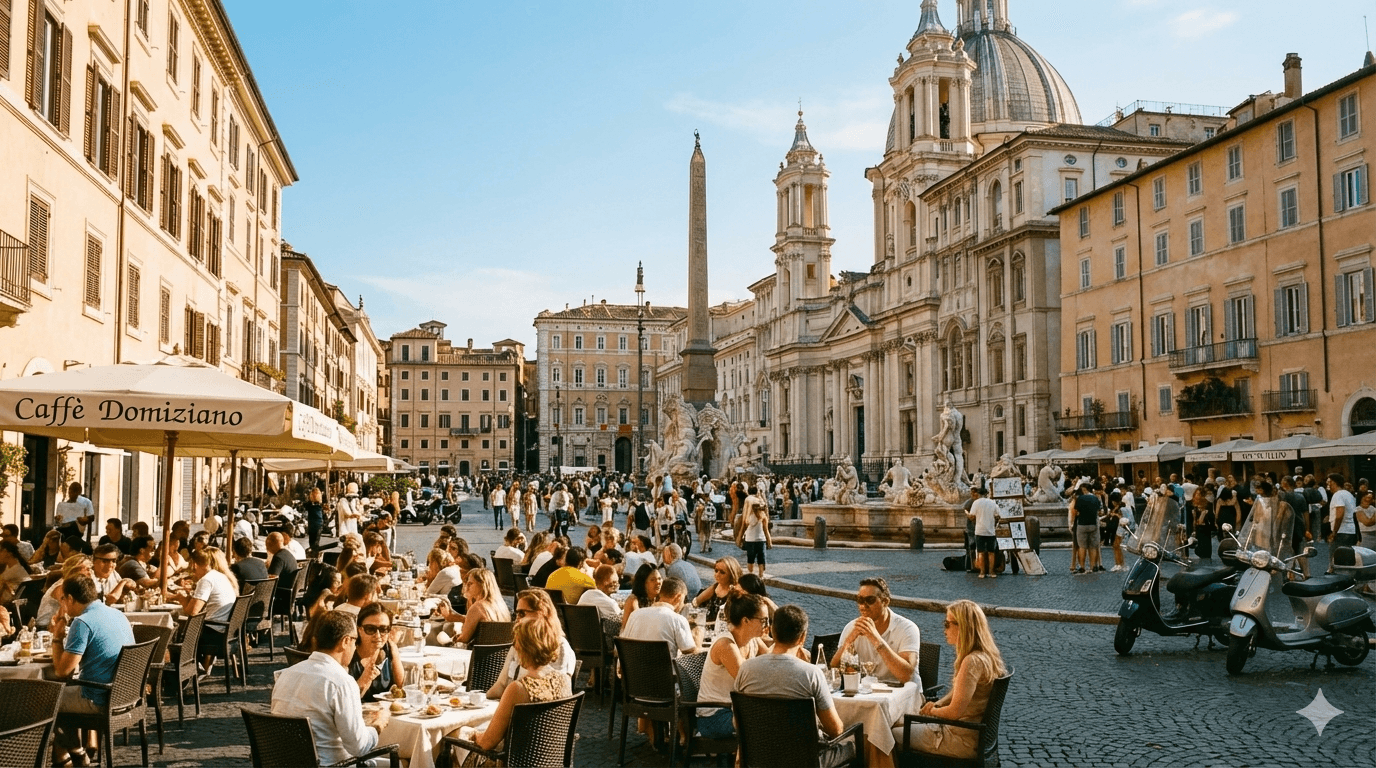
Rome cannot be captured in a few lines, nor can it be regarded as a single destination. Yes, it is “Rome”, but with an incredible diversity: not everything is especially interesting, yet more than we normally see is an enriching extra angle on the city. I experienced this myself when, during an exciting period, I worked with an Italian design agency and they showed me Rome beyond the fairly small area we as tourists always visit and consider to be Rome. Rome is different cities depending on where you come from and what you are looking for: the Vatican and St Peter’s for the centre of the Church, the Roman Forum and the Palatine Hill for antiquity, Trastevere for food, Testaccio for where the Romans themselves eat, and neighbourhoods such as Monti and Pigneto for modern Rome without the hotel chains. Don’t try to see it all in four days. Choose three or four neighbourhoods, hopefully enjoy them, and come back another time. The major sights each have their own portrait with us — the Colosseum, the Pantheon, the Trevi Fountain, the Spanish Steps, Piazza Navona, the Vatican Museums and the Sistine Chapel. If you want to read the city in one go, begin with the journey to Rome.
If you want the city in an order that can be walked, take the top ten sights first and Castel Sant’Angelo last — the castle was the popes’ escape route from the Vatican, and the covered passageway they fled along still stands. And there is a Danish thread running through the city: Thorvaldsen and H.C. Andersen both lived in Rome for years, and their addresses can be visited.
Restaurants that taste of Rome
Restaurants worth booking ahead: Roscioli (deli and restaurant by Campo de’ Fiori, a classic), Pierluigi (fish in a picturesque piazza), Armando al Pantheon (a family-run trattoria a few metres from the Pantheon). For a special occasion: La Pergola (chef Heinz Beck, three Michelin stars) or Il Pagliaccio (Anthony Genovese, two stars). Hotels: Hotel Hassler at the top of the Spanish Steps (a classic grand hotel), Hotel de Russie (Rocco Forte by Piazza del Popolo), or the boutique-level Hotel Locarno with Art Deco charm close to Piazza Navona.
Tuscany
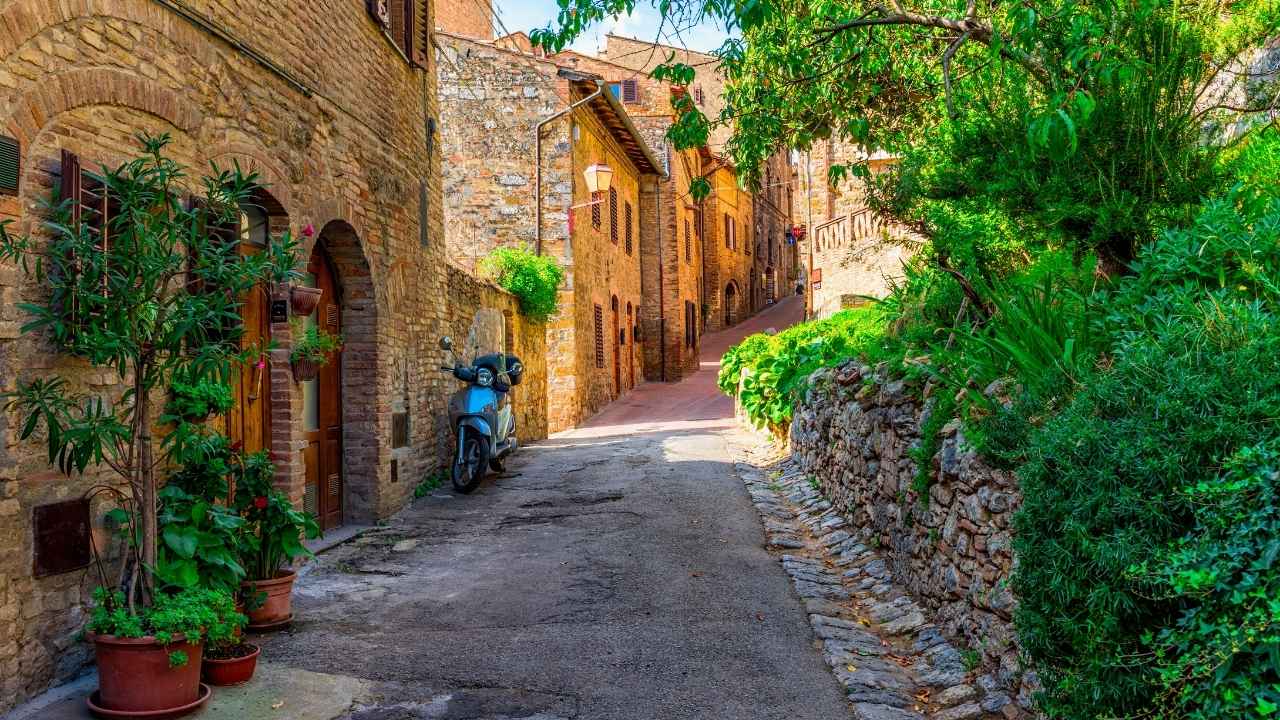
Tuscany is Italy’s most photographed region, and for good reason. Gentle hills, cypress avenues, Renaissance foundations, olive groves and some of Europe’s most disciplined wine regions — Chianti Classico, Brunello di Montalcino, Vino Nobile di Montepulciano. Castello di Ama near Gaiole makes Chianti of the highest class and opens its art programme (with works by, among others, Anish Kapoor and Daniel Buren) to visitors. Castello Banfi in Montalcino is Brunello’s largest flagship.
Florence from the Uffizi Galleries to Bistecca Fiorentina
A visit to Florence for its art — the Uffizi, the Accademia for Michelangelo’s monumental David, the Bargello for the history of sculpture — should be planned as a working week, not a weekend. For lesser-known towns with the same atmosphere and without the crowds: Lucca, Arezzo, San Gimignano, Pienza. Read our Tuscany guide for the deeper detail.
The coast also belongs to Tuscany, and it is overlooked. Forte dei Marmi is the Italians’ own seaside resort north of Pisa, the Grand Hotel Palazzo in Livorno has a rooftop pool and views over the Ligurian Sea, and behind them rise the Apuan Alps — the marble mountains from which Michelangelo took his stone, and a hiking terrain few Danes know.
The Amalfi Coast and Naples
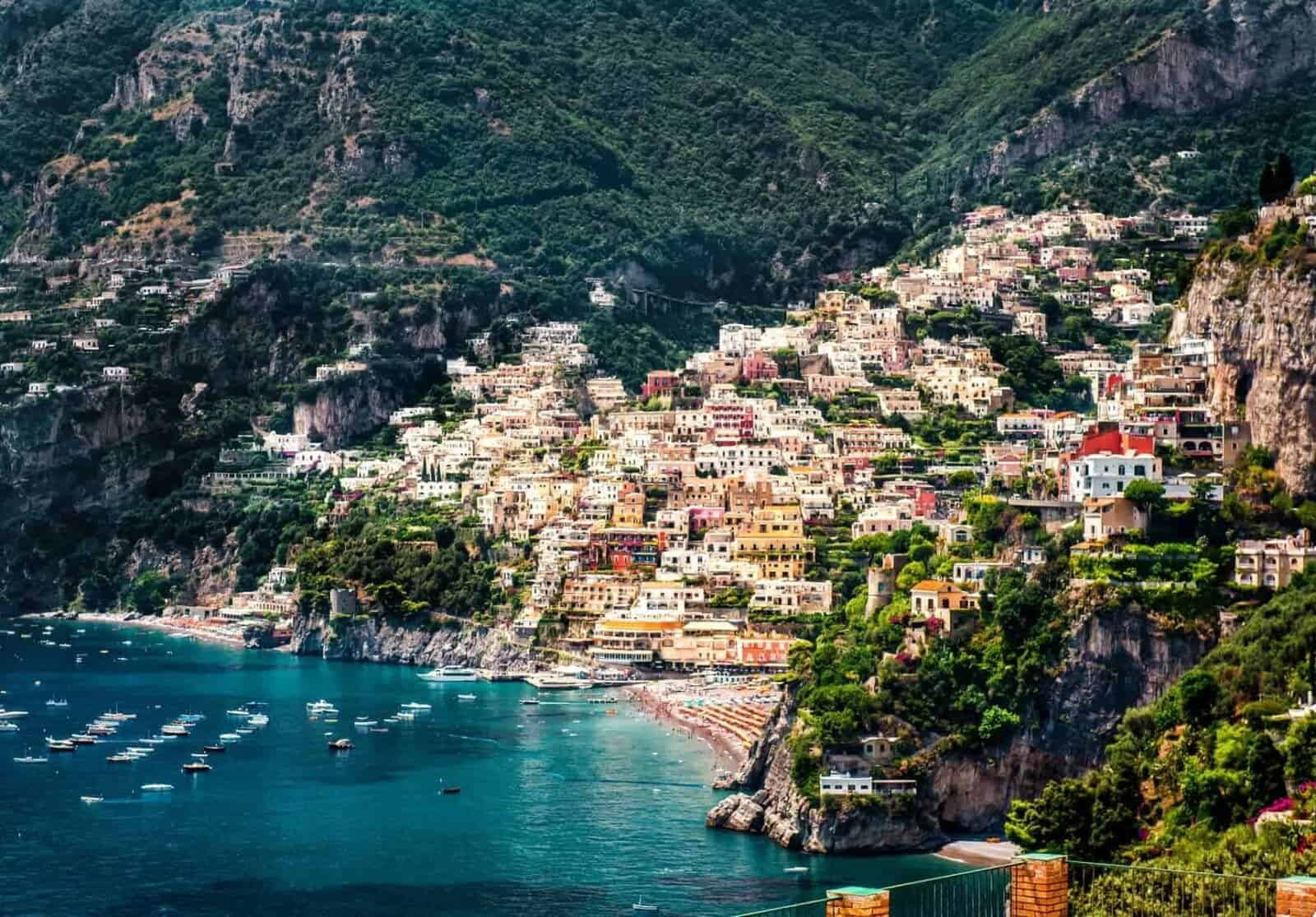
Dramatic clifftop coastlines, small seaside villages, Capri and Vesuvian gastronomy. Positano, Praiano, Amalfi, Ravello and Vietri sul Mare make up the romanticised picture — postcard-perfect, especially from the sea. Le Sirenuse in Positano is one of the world’s most photographed hotels; Belmond Hotel Caruso in Ravello sits on a cliff with endless views over the sea. As for Naples as a city: archaeology at Pompeii combined with the Museo Archeologico Nazionale in Naples, and pizza at L’Antica Pizzeria da Michele or Pizzeria Starita. Out in the bay lies Ischia, the volcanic island where Neapolitans themselves go for thermal baths — an hour’s boat ride from the city.
Read our guide to Positano and the Amalfi Coast.
And if you want Positano without the postcard — when the steps are walkable, where to eat once the day-trippers have gone — then the authentic Amalfi Coast is the longer version.
Venice and the Veneto
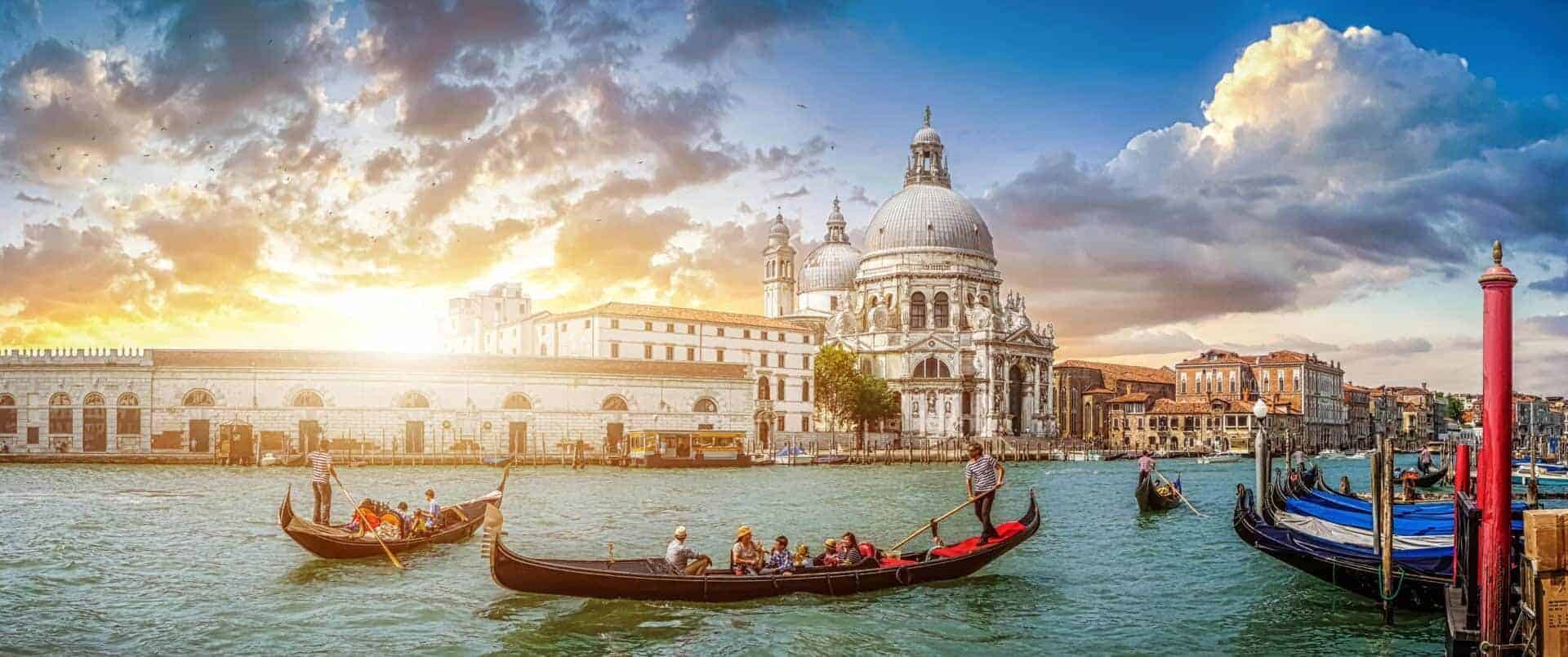
Venice is not a weekend. It is a week, if you want to go deeper than St Mark’s Square and the Doge’s Palace (both worth seeing, both packed). Where you actually meet Venetian life: the Cannaregio district north of the centre, the islands of Burano and Torcello, and the restaurants that don’t feature on TripAdvisor’s first page. Al Covo in the Castello district is a family-run restaurant focused on the local fish from the lagoon. Antiche Carampane in San Polo is Venice’s best-kept secret trattoria.
The Veneto around Venice gives you the Prosecco wine route (the Conegliano-Valdobbiadene district, a UNESCO site since 2019), Verona for opera in the Roman arena in summer, and Padua for art. Continuing east, Friuli lies up against the Slovenian border — the white wine region that Italians themselves drink from. Read our guide to Emilia-Romagna — the culinary neighbour.
If the trip has to fall in winter, the carnival is the city’s one big exception to the low season — ten days in February, when the masks are genuine craftsmanship and hotel prices are the opposite. Emilia-Romagna itself — Parma, Modena, Bologna — is an hour away by train and a different kitchen.
Sicily
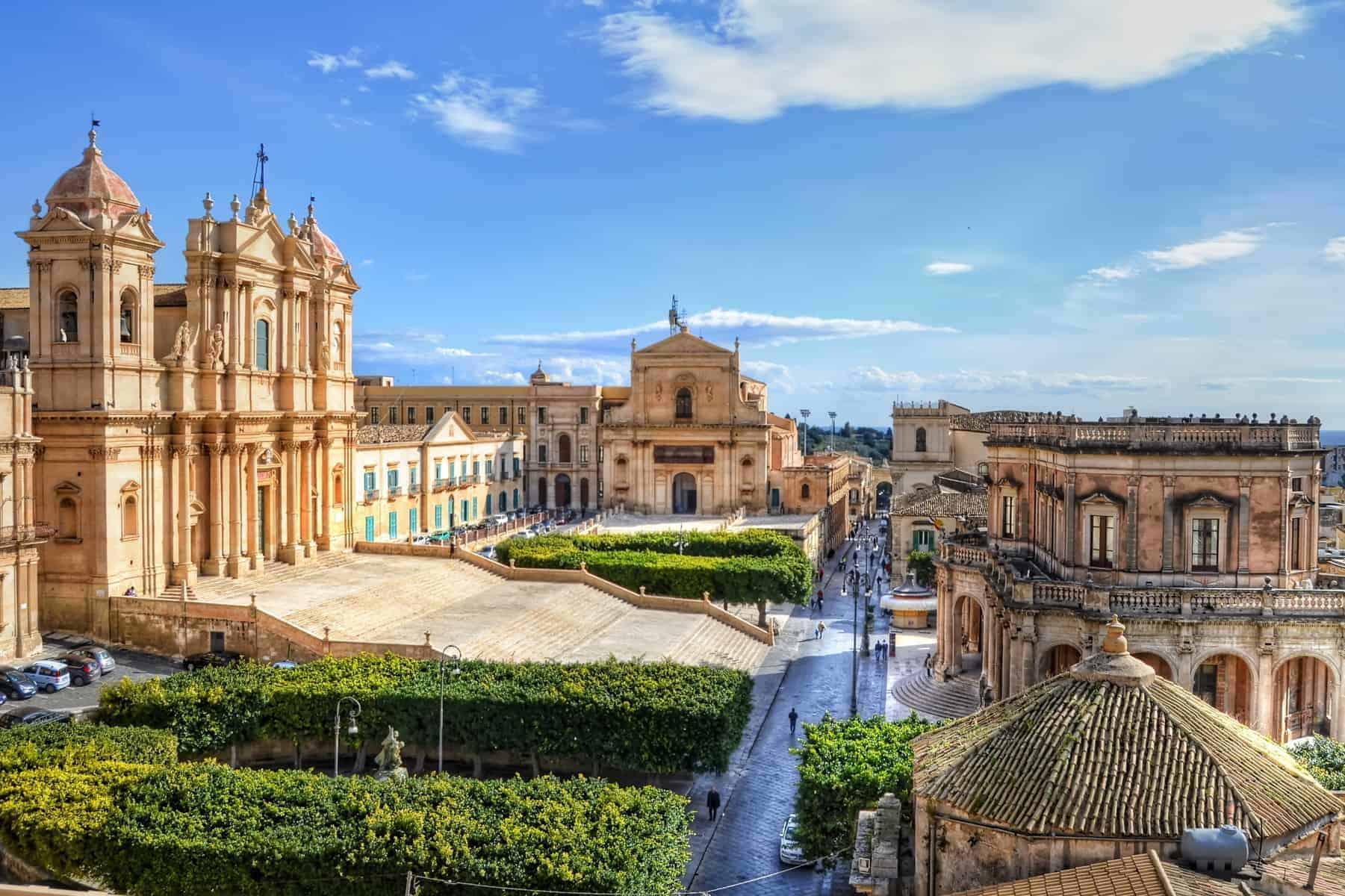
Sicily is a world of its own. Three thousand years of history under the influence of ten civilisations — Greek, Roman, Arab, Norman, Spanish — and you taste it in the kitchen every day. Palermo for its markets and baroque architecture, Catania with Mount Etna looming in the background, Taormina for its iconic coastal setting (and Belmond Villa Sant’Andrea as the hotel anchor), Siracusa for its Greek theatre and the island of Ortigia, Modica for its chocolate, Noto for the baroque and the baroque again. Don Camillo in Siracusa is one of the few restaurants where locals eat and where the food hasn’t been dumbed down for tourists.
For a longer stay: Verdura Resort near Sciacca offers a quiet Sicily for those who want to combine culture with sea views. Read our Sicily guide and guide to Palermo, Taormina and Catania.
If your trip is more beach than baroque, Sicily has dazzling white beaches and a bathing season running to November — and for golfers, Il Picciolo Etna Golf sits with the volcano as its backdrop. Some people, incidentally, simply come back: “so we just go to Sicily again”.
Piedmont and Northern Italy
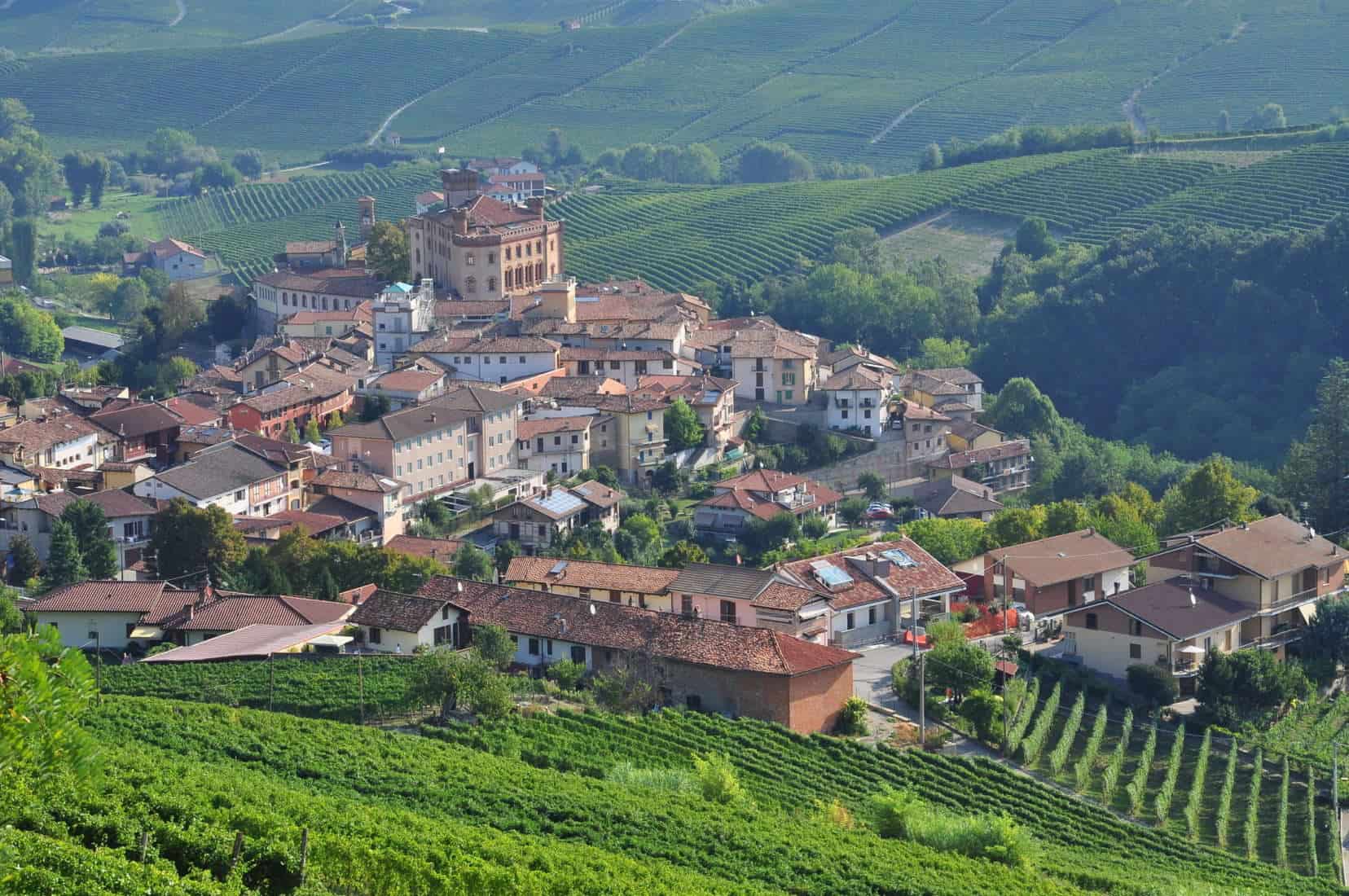
Wine, truffles and industrial elegance. Turin as the capital — underrated for its baroque architecture, the Egyptian Museum (the largest outside Cairo), and the birthplace of the Slow Food movement in Bra. Alba in autumn for truffle season (September to November), and the Barolo and Barbaresco districts between La Morra and Monforte d’Alba for the wine. Restaurants: Da Cesare in La Morra (Piedmont’s classic, honest cooking), Piazza Duomo in Alba (Enrico Crippa, three Michelin stars). Hotels: Villa Tiboldi in Canale, Castello di Sinio in Sinio. East of Piedmont the lakes begin — Lake Garda is the largest and the most varied from shore to shore — and just to the south lies Bergamo with its upper town on the hill. If you want the whole wine country from north to south in one text, take Italy’s wine districts.
The region has its own portrait with us — Piedmont means foot of the mountain — and the wine has its own list: the top wines, and a few you probably didn’t know. The capital deserves more than a stopover; a holiday in Turin is the city that was Italy’s first. Further west lies San Remo on the Italian Riviera, and for motor sport there is Monza and the Mille Miglia. If you want to stay as they did in the old days, the Grand Hotel Salsomaggiore is still there.
The Dolomites and South Tyrol (Alto Adige)
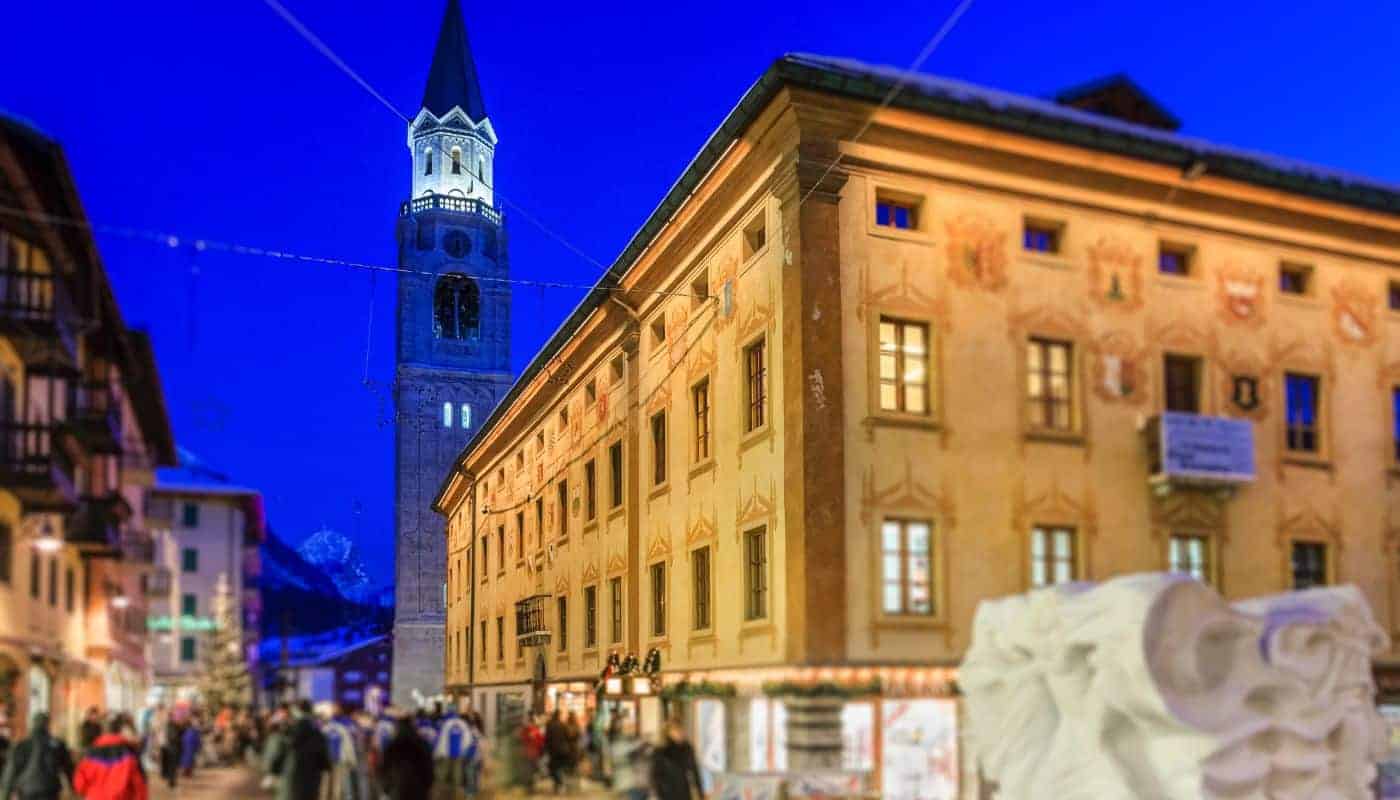
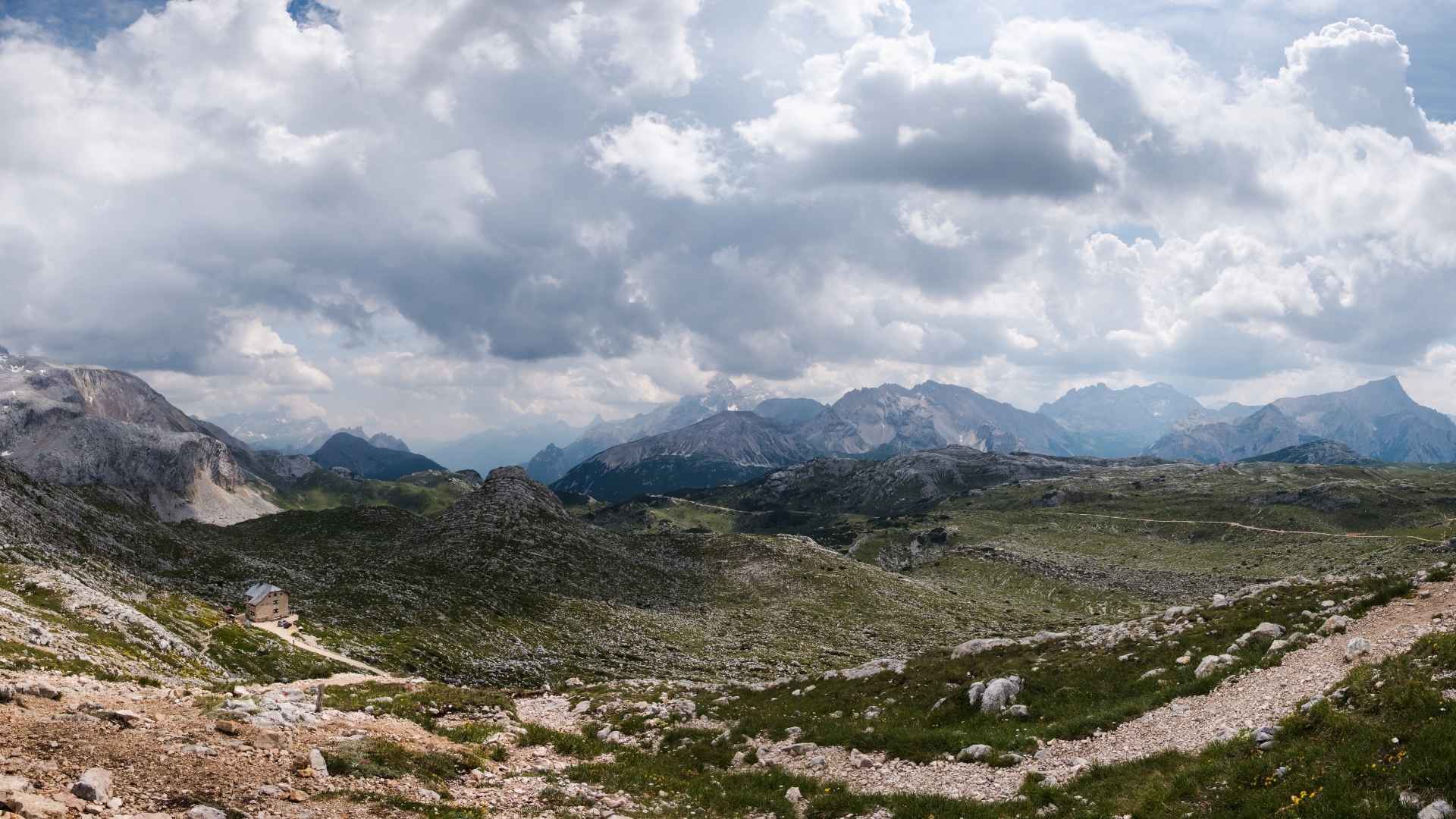
Italy’s German-speaking northern edge. The Dolomites are a UNESCO World Heritage Site, and the Dolomiti Superski ski area, with 1,200 kilometres of piste across twelve valleys, is among the largest in the world. In summer the same mountains become walking country for the Alta Via 1, 2 and 4 — multi-day routes linking hut to hut. Rifugio Lagazuoi sits at 2,835 metres with views over Cortina d’Ampezzo. We have both the complete guide to walking holidays in Italy and a portrait of Livigno, where the season is longest. The combination of German culinary culture (canederli, speck) and Italian wine culture (Lagrein, Gewürztraminer) makes the region distinct from the rest of Italy.
The ski towns have their own personalities: Canazei in the middle of the Sella Ronda with the Super Dolomiti lift pass, Passo Tonale on the glacier with the longest season, Cervinia the highest of them all — and on the far side of the mountain the Matterhorn is shared with Zermatt. In Piedmont lie the Olympic towns of Sestriere and Sauze d’Oulx. For the bigger picture: ski trips to Italy with room in the budget and the practical details on Livigno, which is also a summer destination.
Puglia and the Italian south
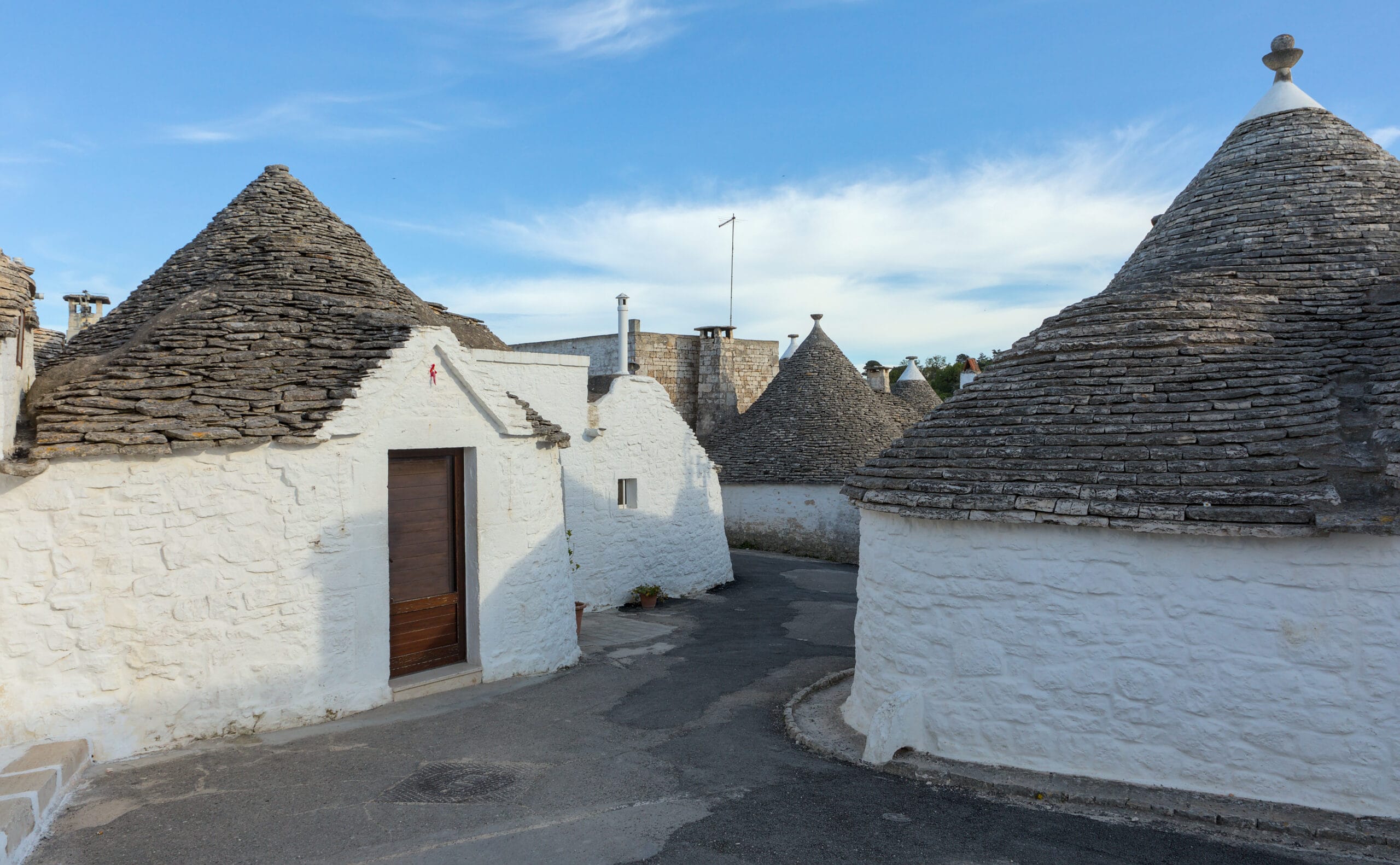
Visited by far fewer Danes than northern Italy, yet one of the country’s most intriguing regions for food and architecture. There are the trulli towns (Alberobello, a UNESCO site), the whitewashed masserias such as Masseria Torre Coccaro near Savelletri, and a coastline between Otranto and Santa Maria di Leuca that feels more Greek than Italian. Lecce, known as the “Florence of the South” for its Baroque, and Altamura inland, where the bread became the first in Europe to receive protected designation of origin in 2003. The whole region in one place: travel to Puglia. Read our guide to the lesser-known Italy.
If you would rather have it arranged, the Puglia road trip is available as a ready-made tour. And a little further north, on the Adriatic coast, lies Le Marche — a region of UNESCO towns, mountains and beaches that Italians holiday in themselves, and that almost no Danes have heard of.
Matera, Basilicata and Calabria
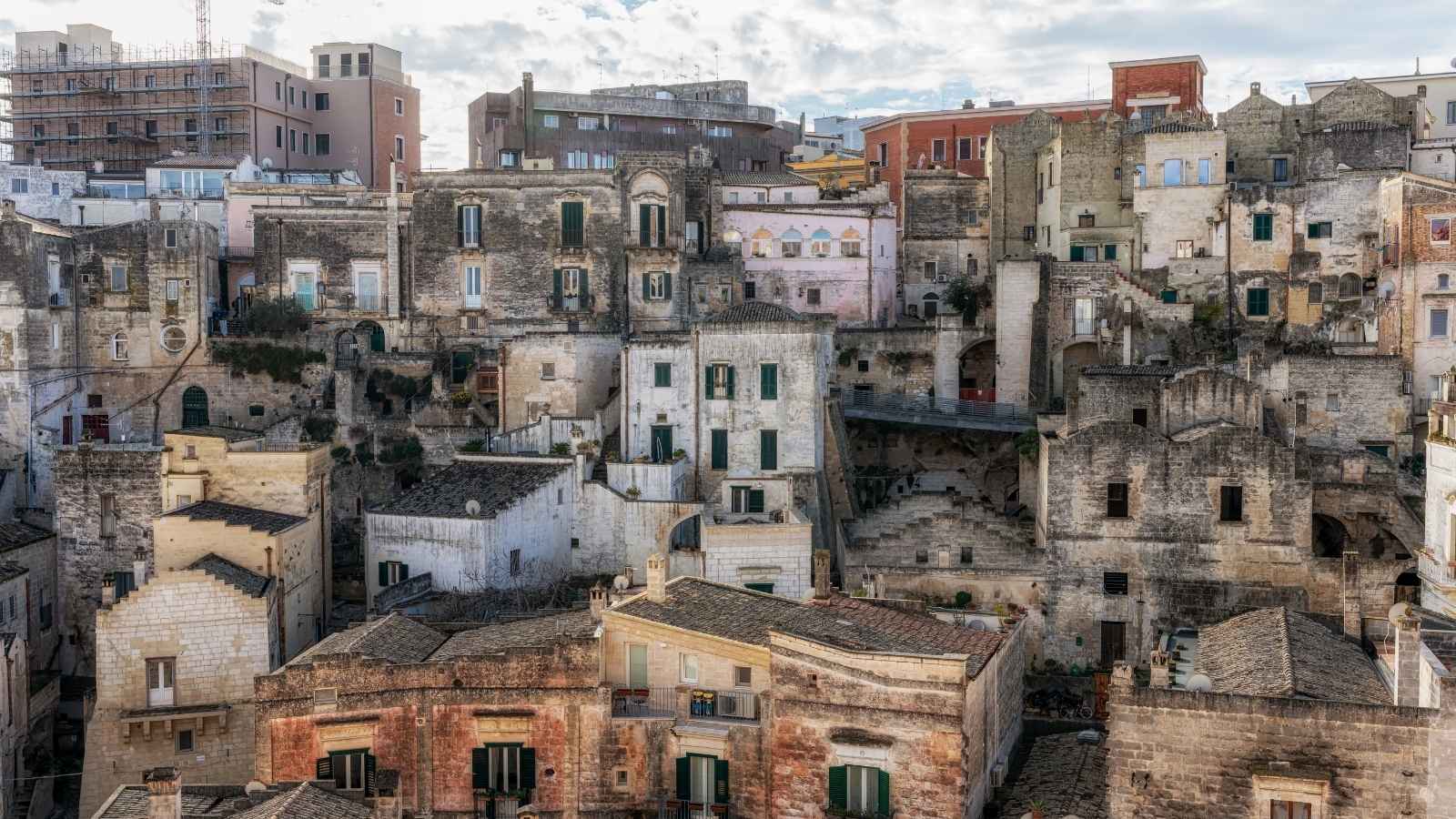
Basilicata was Italy’s poorest region until recently and is now its most interesting revival. Matera was European Capital of Culture in 2019 — staying in the original cave dwellings at Sextantio Le Grotte della Civita is the most memorable hotel experience Italy has to offer. Calabria is still the secret Italy — the coasts around Tropea, the inland tavoliere landscape, towns such as Pizzo and Scilla. Read our Matera guide.
An hour’s drive from Matera, Castelmezzano and Pietrapertosa cling to the cliffs facing each other, linked by a wire you can fly across the valley on. It is Basilicata’s most improbable view.
Liguria and Cinque Terre
Five villages clinging to the cliff between Levanto and La Spezia, with no road down to most of them. The train is the real main road, and the Sentiero Azzurro footpath links the villages in a few hours. Corniglia is the only one of the five without a harbour — it sits a hundred metres up, and the 382 steps from the station are the reason it is the quietest. Portofino and Santa Margherita Ligure lie further north on the same coast and are a different kind of Liguria: money, boats and aperitivo at seven. Read our guide to Cinque Terre and how to get there to Corniglia.
The five villages also have a shorter introduction, if you only need the overview. Further north lie Portofino and Santa Margherita Ligure — the first is the postcard, the second is the town you actually stay in.
Umbria
Italy’s only region without a coastline, and the only major region with no real international tourist pressure to speak of. Assisi for Francis and Giotto’s frescoes, Perugia for the life of its university city, Orvieto for its cathedral and the underground network of Etruscan passageways. The wine is Sagrantino di Montefalco, one of Italy’s darkest and most tannic, and it is practically never found outside the region. Read our Umbria guide.
Sardinia
The Costa Smeralda in the north-east is the Sardinia people know: Porto Cervo, the marina and the prices. The rest of the island is something else. The interior Barbagia has a shepherding culture, its own language and some seven thousand nuraghi — Bronze Age round towers, of which Su Nuraxi near Barumini is on UNESCO’s list. In Ogliastra on the east coast people live unusually long lives; the area is one of the world’s five blue zones, and that is not tourist marketing but demography. Read our twelve destinations in Sardinia.
Italy across the board — themes that run through all twenty regions
Some trips are chosen not by region but by interest, and the route then crosses the country. Castles are the longest of these — from the mountain fortresses of Valle d’Aosta to the Norman ones in Sicily, and several of them you can sleep in. Glamping has become Italy’s fastest-growing form of holiday, and camping with the best pitches remains the cheapest route to the most expensive views. On foot, walking routes are available at every level of difficulty.
Food also crosses borders. Aceto balsamico from Modena is aged for twelve years before it may be called tradizionale, and the price follows accordingly. Puttanesca is the dish that proves four ingredients are enough. Lentils on New Year’s Eve are meant to bring money in the year ahead, and they are eaten everywhere from the Alps to Sicily. And if you have wondered about it: the difference between French and Italian cooking lies in how many hands have touched the raw ingredient.
If your trip falls in December, Christmas and New Year in Italy make for a different kind of holiday: the Christmas markets of South Tyrol, midnight mass in Rome, and a cuisine that changes completely. And for those who want the whole country in one article, there are all twenty regions, the five autonomous ones and the full travel guide — plus a shorter invitation, should you simply need persuading.
Season — when you travel changes everything
Italy is not the same all year round, and choosing the right season is perhaps the most important decision you make after choosing the region.
April-June — the best time for Tuscany, Puglia and Sicily. Pleasant weather, blossom, no summer crowds. Also good months for Rome, Florence and Venice (though Venice is still busy). For a seaside holiday it is still too cold in the sea in April.
July-August — the coastal months. Amalfi, Sardinia, Sicily, Cinque Terre at their most beautiful. BUT: the tourists are all there, the restaurants are booked up, the roads are jammed. Many of Italy’s favourite spots shut down around Ferragosto (15 August) — the country is on holiday. Avoid these two months if you can, or steel yourself to accept the crowds.
September-October — the unquestionably best time. The grape harvest in Tuscany and Piedmont, the truffle season in Alba begins, fewer tourists, the light still fine, the Mediterranean sea still warm. If anyone asks when to visit Italy once a year — this is the answer.
November-March — for the cities (Rome, Florence, Venice without the queues) and for skiing in the Dolomites. The coastal regions are quiet (many hotels on the Amalfi Coast close from November to March). Carnival in Venice (February), truffle markets in Alba (November), and the cosy Italian winter with fireplaces and braised dishes.
Italy from the Nordics — practical matters
Most Danish trips to Italy are by air. The rail network links Copenhagen to Milan via Hamburg and Munich in about 14 hours — for those who want to. Driving is possible in summer but requires two to three days on the road from Zealand to Tuscany.
Rome — direct flights from Copenhagen to Rome Fiumicino (FCO) with SAS daily, about 2 hours 45 minutes. Norwegian seasonal. From FCO by train, the Leonardo Express runs direct to Roma Termini in 32 minutes.
Milan and Northern Italy — direct flights to Milan Malpensa (MXP) with SAS and Norwegian, about 2 hours 30 minutes. From MXP, the Malpensa Express reaches the centre in 50 minutes, or take a high-speed train direct to Turin (1 hour), Venice (2 hours 30 minutes), Florence (2 hours).
Venice — direct flights to Venice Marco Polo (VCE) with SAS and Norwegian (seasonal), about 2 hours 30 minutes. A water taxi from the airport to St Mark’s Square takes 30 minutes — an extravagant but memorable arrival.
Sicily — direct flights to Catania (CTA) and Palermo (PMO) with SAS and Norwegian seasonally, otherwise via Rome or Milan. About 3 hours 15 minutes direct.
Tuscany — Pisa (PSA) is the traditional gateway (direct from Copenhagen seasonally with low-cost carriers), but Florence (FLR) now also has direct connections. As an alternative: Bologna (BLQ) — Italy’s cheapest major-city flights, with a high-speed train to Florence in 35 minutes.
The Amalfi Coast — fly to Naples (NAP, direct from Copenhagen) or Rome and drive the last 2-3 hours. The Amalfi Coast itself has no major airport.
For Nordic neighbours: Oslo, Stockholm and Helsinki have direct routes to Rome and Milan. For other destinations, a connection via Rome or Munich is usually most convenient. Finnair and SAS cover most of it; KLM via Amsterdam and Lufthansa via Frankfurt or Munich are good alternatives.
Within Italy: Frecciarossa and Italo (Italy’s high-speed trains) link Rome, Milan, Florence, Venice and Naples in under 4 hours. Book directly with Trenitalia or Italo (not through aggregators — you pay more). For Tuscany’s wine towns, Puglia’s trulli areas and Sicilian island tours you will need a car. Hertz and Sicily by Car are reliable rental companies. Be aware of ZTL zones (Zona a Traffico Limitato) in every Italian city centre — you must not drive in, and fines are sent to Denmark for 2-3 years after the offence. For practical planning and an overview: ENIT — the official Italian tourist information.
Which region for which kind of trip?
If it is your first Italian trip — Rome (4 days) + Tuscany (5 days). Classic, and for good reason. You cover antiquity, the Renaissance, city life, wine and the Italian landscape in one journey.
If you have already seen the classics — Sicily (Palermo-Syracuse-Catania), Puglia (Lecce-Otranto-Alberobello-Bari), or the Aeolian Islands (Lipari-Salina-Stromboli).
If you are travelling for the food — Emilia-Romagna (Parma, Modena, Reggio Emilia, Bologna) is Italy’s culinary heartland: pasta, prosciutto, Parmigiano, balsamic vinegar, Ferrari (in Modena). Read our Emilia-Romagna guide.
If you’re travelling for the wine — Tuscany (Brunello, Chianti) in spring or Piedmont (Barolo, Barbaresco) in autumn. Both are best planned as a “week on a vineyard” rather than a “three-day wine route.”
If you’re travelling for the nature — the Dolomites in summer for hiking, the Gran Sasso mountains in Abruzzo for the still-secret Italy, Stelvio National Park for the Alpine, or the Aeolian Islands for the volcanic-tropical.
If you’re travelling with family — Tuscany (slow pace, good food stops, short distances between towns), Sicily (beaches and culture in the same region), or the Lake Garda area (family infrastructure, though not cheap).
If you’re travelling for skiing — the Dolomiti Superski area in South Tyrol. Our guide to skiing in Italy covers it in more depth.
FAQ – Italy
When is the best time to visit Italy?
For cities and culture: April to June and September to October. For a coastal holiday: June to September (though July and August are overcrowded). For a ski holiday: December to March. For the truffle season in Piedmont: October to November. For the Venetian Carnival in Veneto: February.
Is Italy expensive?
Mid-range overall. Rome, Milan, Venice and the Amalfi Coast are expensive — allow 1,500 to 3,000 kroner per person per day including a mid-range hotel, restaurants and transport. Tuscany, Puglia, Sicily and the smaller towns of northern Italy are cheaper — 1,000 to 1,800 kroner a day.
Which regions should first-time visitors choose?
Rome (3 to 4 days) plus Tuscany (4 to 5 days) is the classic combination. Alternatively: Rome, the Amalfi Coast and Capri for a more coastal experience. Together, these cover the country’s two or three most distinct faces.
How do you get around Italy?
Frecciarossa and Italo high-speed trains between major cities (book directly via Trenitalia or Italo). A car is necessary in Tuscany, Piedmont, the Amalfi Coast, Puglia, Sicily and the Dolomites. Always check ZTL zones in city centres before driving in — the fines arrive two to three years later.
Is Italy family-friendly?
Very. Italians love children in restaurants — it’s normal to see families dining together at 9.30pm. Lake Garda, Tuscany, Sicily (beaches and culture) and South Tyrol (hiking and skiing) are particularly family-friendly.
Where can you find the best wines?
Piedmont (Barolo, Barbaresco), Tuscany (Brunello, Chianti), Veneto (Amarone, Prosecco), Sicily (the Etna wines), Friuli (the white wines). Read winetalk.dk’s Italian wine universe for the deeper material.
📄 Quick overview
Best time to travel: April to June and September to October (cities/culture), June to September (coast), December to March (skiing)
Language: Italian (English in tourist areas, less so in the provinces)
Currency: Euro (€)
Transport: Direct flights from Copenhagen to Rome, Milan, Venice, Catania (seasonal). Frecciarossa/Italo trains between major cities. Car in the regions.
Price level: Mid-range (higher in Rome, Milan, Venice, Amalfi)
Plug type: Type C/F/L (an adapter is recommended for Type L)
Time zone: CET (same as Denmark)
💡 Traveltalk tips
Avoid travelling around Ferragosto (15 August). Many of the best places close, locals flee to the coasts, and everything is too hot and too crowded. September is statistically Italy’s best month to travel.
Eat when the Italians do. A trattoria that starts dinner service at 7.30pm and is full of Italians after 9pm almost always has better food than the restaurant serving at 6pm to a room of northern Europeans.
Book restaurants in advance. Roscioli in Rome, Cibrèo in Florence, Da Cesare in La Morra — at least a week ahead. La Pergola, Le Calandre, Osteria Francescana — two to three months ahead.
Check ZTL before driving into a town. Lucca, Florence, Rome, Bologna and Verona all have low-emission/ZTL zones with camera surveillance. The fine reaches Denmark two to three years later.
Hidden gems:
- Matera (Basilicata, a cave town)
- Lecce (Puglia, the “Florence of the South”)
- Procida (a small island near Capri, authentic)
- Lucca (Tuscany without the Florence crowds)
- Bra (Piedmont, the headquarters of the Slow Food movement)
- Prosecco Hills (Conegliano-Valdobbiadene, a UNESCO wine landscape)
Read on
- Guide to Rome
- Tuscany — our guide
- Positano on the Amalfi Coast
- Sicily — Italy’s southern beauty
- Emilia-Romagna — the culinary heartland
- Cinque Terre — travel guide
- Matera in southern Italy
- The unknown Italy
- Skiing in Italy
- Our France universe (the neighbouring country in our network)
Ready for Italy?
Italy is a country you return to again and again — for the atmosphere, the flavours, and to discover the next village you never knew existed. Use this guide as your entry point, and dive into the regional guides for the deeper material. We update the content on an ongoing basis.
Buon viaggio — and welcome to La Dolce Vita.
Also read: Train journeys under the stars — the guide to the train journey as an experience