
Your travel guide to Greece – more than 25 islands, travel ideas and travel providers
Greece is the cradle of Western civilisation, democracy and philosophy – but it is also one of the Mediterranean’s most beloved holiday destinations, with over 6,000 islands (227 of them inhabited), crystal-clear water, whitewashed villages and a food culture recognised by UNESCO as part of the intangible cultural heritage of humanity. From Santorini’s romantic sunsets to Athens’ magnificent Acropolis, from Crete’s Minoan palaces to Mykonos’ buzzing nightlife, Greece has something for every traveller.
More than 25 million tourists visit Greece every year, including hordes of happy Danes seeking sun, beach, history and the Greek “philoxenia” (hospitality). With over 300 days of sunshine a year in many regions, a simple and healthy cuisine based on olive oil, fish and vegetables, and affordable holiday options, Greece is the perfect destination for couples, families and adventurers. It certainly calls for a travel guide to Greece:
📄 Travel facts for your trip to Greece
- Location: South-eastern Europe — the mainland, the Peloponnese peninsula and over 6,000 islands and islets, 227 of which are inhabited
- Capital: Athens
- Language: Greek — English is widely spoken, including on the smaller islands
- Currency: euro (EUR)
- Best season: May–June and September–October offer the same warm sea as midsummer at lower prices. July–August is high season
- Recommended length of stay: 3–5 nights per island — fewer islands, more nights
- Price level: moderate, and noticeably lower than Spain and Italy. Dinner at a taverna €10–15
- ✈️ Departing from: Copenhagen Airport (CPH) — direct to Athens year-round, and in season to Crete, Rhodes, Santorini, Mykonos, Kos, Corfu and Zakynthos
💡 Traveltalk tip
The ferry is not just transport, it is a decision. Island-hopping sounds easy and devours days: a crossing typically takes half a day once you factor in the port, waiting time and check-in at the other end, so three islands in a week ends up being mostly ports. Stay three to five nights per island. Routes such as Paros–Naxos–Ios or Milos–Sifnos–Serifos work well because the distances between them are short — and in high season the fast ferries should be booked in advance, as they sell out.
Insider tip: the famous islands are famous for a reason, but the three that most often surprise are Milos with its volcanic beaches, Folegandros, which is still unspoilt and dramatic, and Pelion on the mainland, where mountain villages overlook the sea and almost no Danes ever arrive.

🤝 Travel partner — the space is available. This is where we recommend travel partners: Who can provide the trip or simply accommodation/transport? Do you organise trips to Greece? The space could be yours — write to us at hello@leisuretalk.net.
Contents
- Why travel to Greece?
- The Greek islands
- Athens and the mainland
- History and ancient ruins
- Beaches and coastal life
- Greek food and wine
- Practical information

Why travel to Greece?
Greece combines the best of several worlds: a Mediterranean climate with a guarantee of sunshine, one of the world’s most important historical heritages, outstanding food, friendly people and prices that remain very reasonable compared with the rest of southern Europe.
The cradle of European civilisation
Greece laid the foundations of Western civilisation. Democracy, philosophy, mathematics, theatre, the Olympic Games — all invented or perfected by the Greeks. The name “Europe” is itself Greek and comes from the Phoenician princess Europa, who, according to myth, was abducted by Zeus in the form of a bull.
Visiting Greece means walking through living history. The Acropolis in Athens, the Oracle at Delphi, the Olympia stadium, the palace of Knossos on Crete — these sites are not just ruins, they are the foundations of our modern world.
Climate and weather
Greece enjoys a typical Mediterranean climate:
- Summer (June–September): Hot and dry, 28–35 degrees, perfect for beach holidays
- Spring (March–May): Mild, 18–25 degrees, ideal for sightseeing and walking
- Autumn (September–November): Still warm, 20–28 degrees, the sea is at its warmest
- Winter (December–February): Cool in Athens (10–15 degrees), but mild on the southern islands
Most Greek islands enjoy over 300 days of sunshine a year, which makes Greece one of Europe’s most sun-reliable destinations.
Economy and prices
Following the economic crisis of a few years ago, Greece has re-established itself as a stable tourist destination. Prices remain attractive – a dinner at a local taverna costs 10–15 euros, and you can find charming hotels from 50–100 euros a night. Greece offers remarkable value for money.
The Greek islands: from Santorini to Crete
The Greek islands are the heart of Greek tourism. With over 6,000 islands scattered across the Aegean and Ionian Seas, there is an island to suit every taste.
The Cyclades – iconic whitewashed villages
Santorini – the most romantic island
Santorini is perhaps the most photographed island in the world, with its white houses, blue domes and spectacular sunsets over the caldera. The island was shaped by a massive volcanic eruption around 1600 BC, which left behind the crescent-shaped caldera we see today.
What to experience on Santorini?
- Oia: The most photogenic town in Greece – come for the sunset
- Fira: The main town, with shopping, restaurants and a cable car ride
- Caldera boat trip: Sail into the volcanic crater and visit the hot springs
- Wine tasting: Santorini has some of the world’s oldest vineyards – the Assyrtiko grape is exceptional
- Beaches: Red (Red Beach), black (Kamari, Perissa) and white (White Beach) volcanic beaches
- Akrotiri: A Minoan town buried by a volcanic eruption – the “Atlantis”?
Santorini is ideal for honeymooners and couples, but it is also popular with travellers of all kinds. Expect prices at the higher end – Santorini is not a budget destination.

Mykonos – glamour and partying
Mykonos is Greece’s most glamorous island – known for luxury hotels, designer boutiques, world-famous DJs and spectacular nightlife. But Mykonos is also incredibly beautiful, with its white cube houses, winding lanes and iconic windmills.
Mykonos highlights:
- Mykonos Town (Chora): A labyrinth of white streets, perfect for wandering
- Little Venice: Houses built right out over the sea – a romantic sunset
- The Five Windmills: The symbol of Mykonos
- Paradise Beach & Super Paradise: Party beaches with beach clubs and DJs
- Delos: A UNESCO World Heritage Site – Apollo’s sacred island, a boat trip away
- Psarou Beach: A jet-set beach with luxurious beach clubs
Mykonos attracts both LGBT+ travellers (the island is extremely liberal and welcoming) and jet-setters from around the world. Expect high prices, especially in high season.

Ios – the party island
Ios is the most festive of the Cyclades, with a younger crowd, but also fantastic beaches and authentic Greek charm in Chora. Homer is reputedly buried here.
Other Cycladic islands
- Paros: Relaxed, authentic, with beautiful beaches – a perfect stopover
- Naxos: The largest and greenest of the Cyclades – family-friendly
- Milos: Geological wonders and secluded bays
- Folegandros: Quiet, authentic, with dramatic cliffs
Crete – Greece’s largest island
Crete is Greece’s largest and most varied island – you can ski in the White Mountains in the morning and swim in the Mediterranean in the afternoon. Crete has it all: Minoan palaces, Venetian towns, beautiful beaches, mountains, gorges and a proud, independent culture.
Crete’s highlights
- Knossos Palace: The capital of the Minoans (Europe’s first civilisation) – 3,500 years old
- Chania: A Venetian harbour town – perhaps Crete’s most beautiful town
- Rethymnon: A medieval town with a Venetian fortress
- Heraklion: The capital, with an outstanding archaeological museum
- Samaria Gorge: A 16 km hike through Europe’s longest gorge
- Elafonissi: Pink sand beach – one of the most beautiful in the Mediterranean
- Balos Lagoon: Caribbean-coloured water in Greece
Crete has the longest summer in Europe and is perfect for families, couples and adventurers. The island is so large that you can easily spend two to three weeks here.

The Dodecanese – the sun closest to Turkey
Rhodes – a medieval gem
Rhodes combines fantastic beaches with one of the best-preserved medieval towns in the Mediterranean (UNESCO World Heritage). The old town of Rhodes City is surrounded by impressive fortifications built by the Knights of St John.
Must-see on Rhodes:
- Old Town of Rhodes: Medieval town with cobbled streets and the Palace of the Grand Master of the Knights
- Lindos: Beautiful white village with an acropolis on a clifftop
- Prasonisi Beach: Windsurfing paradise
- Valley of the Butterflies: Thousands of butterflies (June–September)
Kos – the island of Hippocrates
Kos is the birthplace of Hippocrates (the father of medicine) and a relaxed, green island with excellent cycle paths, long sandy beaches and good taverna food.

The Ionian Islands – Greece’s green side
Corfu – Venetian elegance
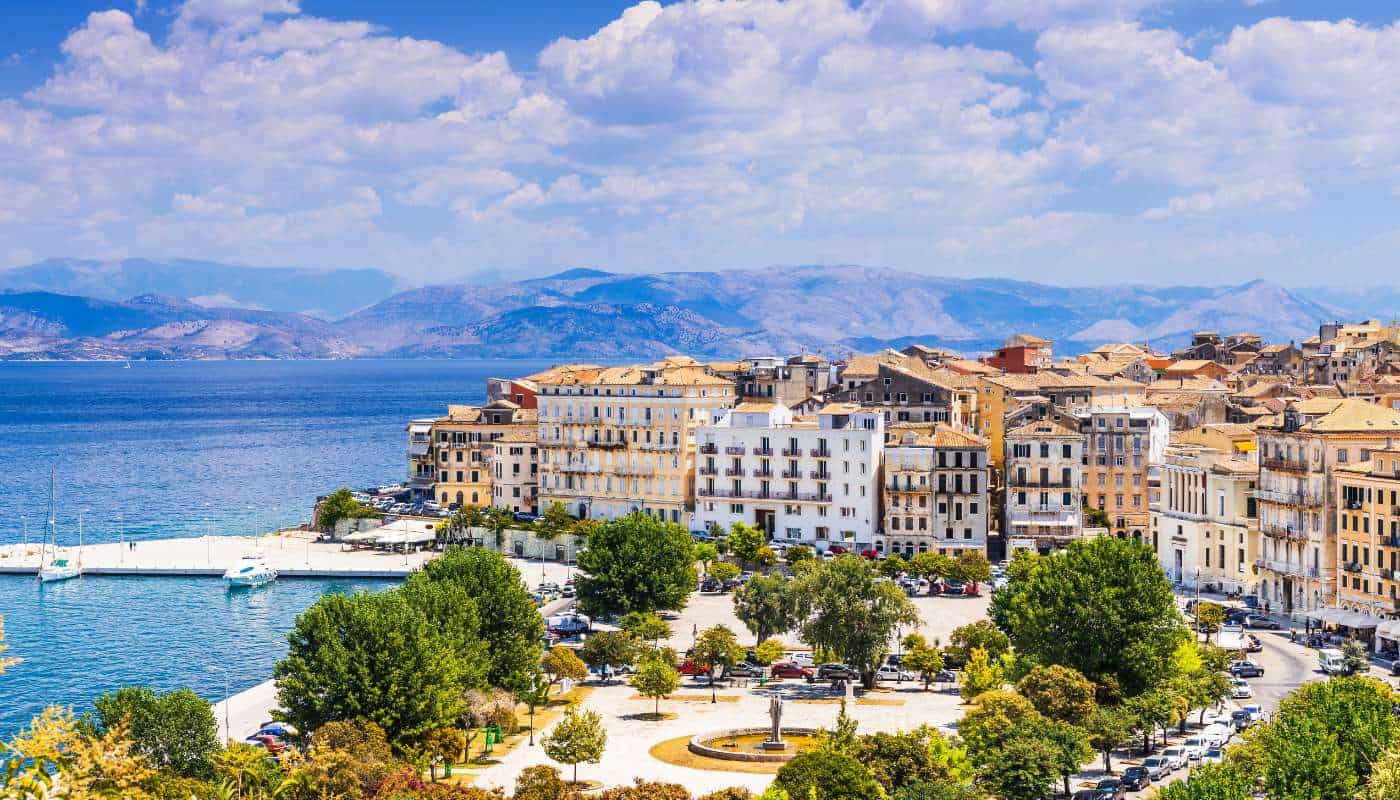
Corfu (Kerkyra) is lusher than the dry Cyclades and Dodecanese islands thanks to more rainfall. The island has Venetian, French and British heritage, giving it a unique cultural blend.
Zakynthos – Navagio Beach
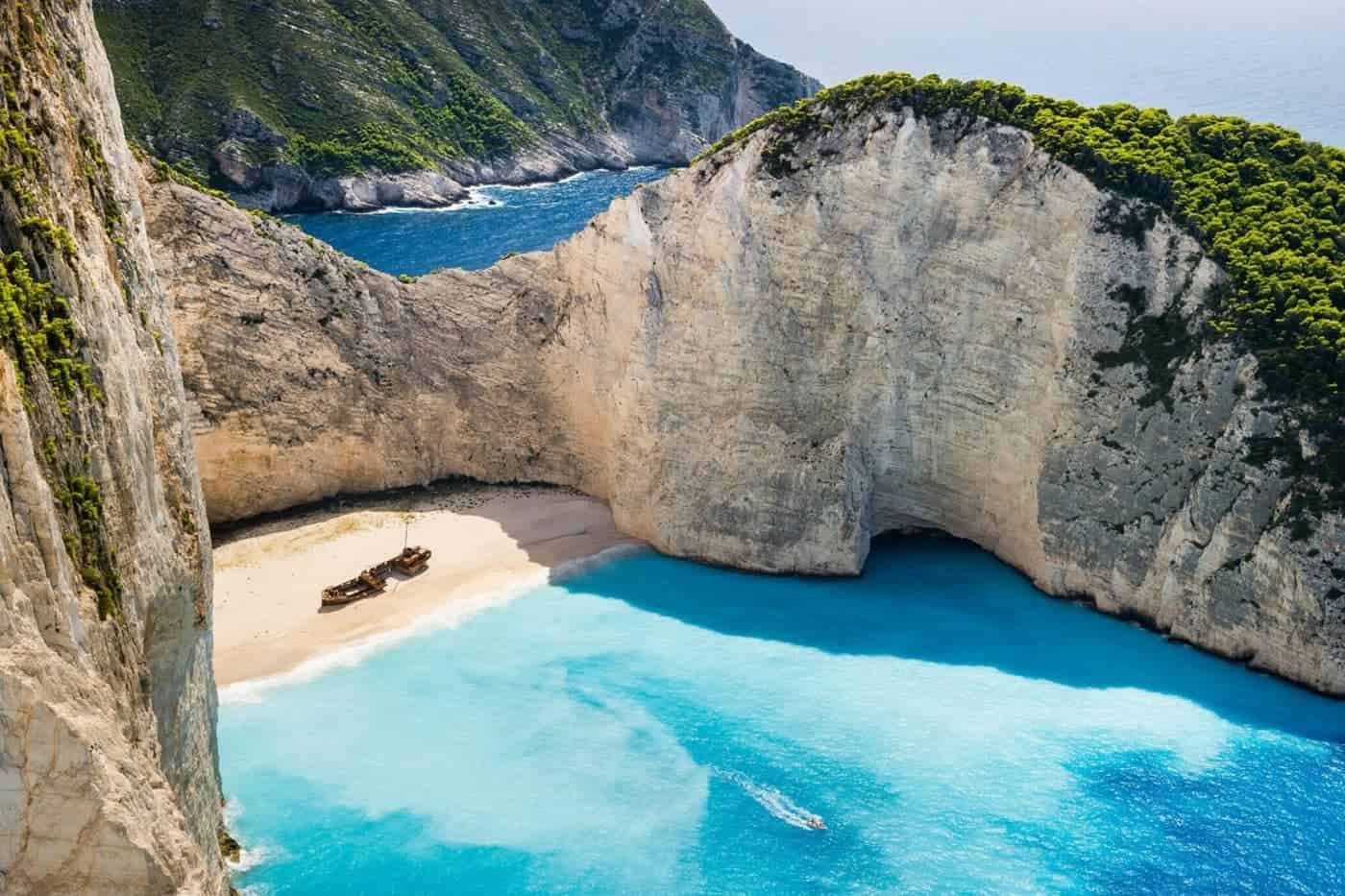
Zakynthos is home to Navagio Beach (Shipwreck Beach) – one of the world’s most photographed beaches, with a shipwreck stranded on white sand surrounded by dramatic cliffs.
Other important islands
- Samos: Green island close to Turkey, known for sweet Muscat wine
- Lesbos: Greece’s third-largest island, ouzo production and the history of Sappho
- Thassos: The northernmost island, green and mountainous
Athens and mainland Greece
Athens – the world’s oldest capital
Athens is 3,400 years old and has been continuously inhabited ever since. The city is the birthplace of democracy and home to some of the world’s most important historical monuments. Modern Athens is a vibrant metropolis of 3.7 million people, with excellent museums, fantastic food and a surprisingly lively nightlife scene.
Athens’ top sights
- Acropolis: The most iconic monument in Greece, with the Parthenon temple (432 BC)
- Acropolis Museum: World-class museum of Parthenon sculptures
- Ancient Agora: Athens’ marketplace and political centre in antiquity
- Plaka: Charming old quarter with tavernas and shops
- Syntagma Square: Parliament and the changing of the guard in front of the Unknown Soldier
- National Archaeological Museum: The finest collection of Greek antiquities in the world
- Lycabettus Hill: Panoramic views over Athens
- Monastiraki Flea Market: Shopping and street life

Gems of the mainland
Delphi – the oracle of Apollo
Delphi was the spiritual centre of the ancient world, where the Pythia (the priestess) delivered Apollo’s prophecies. Its location on the slopes of Mount Parnassus is spectacular. UNESCO World Heritage Site.
Meteora – monasteries in the clouds
Meteora is one of Greece’s most extraordinary sights: Byzantine monasteries built on top of massive sandstone formations rising 400 metres above the plain. Six monasteries are still active and can be visited. UNESCO World Heritage Site.
Olympia – the birthplace of the Olympic Games
Olympia was home to the ancient Olympic Games (from 776 BC to AD 393). You can visit the original stadium, the Temple of Zeus and the archaeological museum.
Other mainland destinations
- Epidaurus: Ancient theatre with perfect acoustics (14,000 seats, still in use)
- Mycenae: Bronze Age civilisation, Lion Gate
- Nafplio: A lovely harbour town, Greece’s first capital
- Pelion: A mountainous peninsula with charming villages
- Thessaloniki: Greece’s second city, cosmopolitan and cultured
Greek History and Ancient Wonders
Greece is the richest country in the world in historic monuments per square kilometre. Travelling through Greece means walking through 5,000 years of history.
Minoan civilisation (c. 2700-1450 BC)
Europe’s first advanced civilisation flourished on Crete. The Palace of Knossos, with its famous frescoes and the myth of the Minotaur, represents this period.
Mycenaean period (c. 1600-1100 BC)
The Mycenaeans on the mainland built fortresses such as Mycenae and Tiryns. The Trojan War and Homer’s Iliad and Odyssey date from this era.
Classical period (480-323 BC)
Greece’s golden age: democracy, philosophy (Socrates, Plato, Aristotle), theatre (Sophocles, Euripides), architecture (the Parthenon). Athens was the cultural leader, Sparta the military power.
Hellenistic period (323-31 BC)
Alexander the Great spread Greek culture to Egypt, Persia and India. Greek became the lingua franca of the known world.
Roman and Byzantine period
Greece became part of the Roman Empire (146 BC) and later the Byzantine Empire (330-1453 AD). Christianity became the dominant religion.
Ottoman rule (1453-1821)
Four centuries under Turkish rule shaped modern Greek identity and the struggle for freedom.
Modern Greece (1821-)
Greece won independence in 1821, restored democracy, and has been an EU member since 1981.
Greece’s Beaches: From Pink to Black Sand
With 13,676 kilometres of coastline, Greece has some of the most beautiful beaches in the world. From Caribbean-like lagoons to volcanic black sand beaches, the variety is enormous.
The most beautiful beaches in Greece
Navagio Beach (Zakynthos)
The wreck is the cargo ship Panagiotis, which ran aground in 1980. The bay is enclosed by 200-metre-high cliffs and can only be reached by boat — typically from Porto Vromi (about 30 min) or Agios Nikolaos (about an hour). The viewing platform on the cliff is a separate drive, so if you want to see the beach both from below and from above, set aside a full day.
What you need to know: there is no shade, water or facilities on the beach, and the bay has been closed at times following rockfalls. Take the earliest boat — from around midday the boats are packed.
Elafonissi (Crete)
The pink hue comes from crushed shell fragments mixed into the sand, and the water is so shallow and warm that you can wade a long way out. This makes Elafonissi Crete’s most child-friendly beach.
What you need to know: the beach is about 75 km south-west of Chania along winding mountain roads — allow an hour and a half’s drive each way. The area is protected nature, so the sand may not be taken home. Between 11 am and 4 pm in high season it is crowded; come early or late.
Balos Lagoon (Crete)
A shallow lagoon at the north-western tip of Crete, with views of the Venetian fortress on Gramvousa. The colours are closer to the Caribbean than the Mediterranean.
What you need to know: there are two ways there. The boat trip from Kissamos (about an hour) is the easy option and often includes a stop at the fortress. The alternative is 8 km of gravel road followed by a 20-minute walk down — and the same walk back up in the afternoon heat, which is the part people underestimate. The wind picks up in the afternoon.
Myrtos Beach (Kefalonia)
The white limestone bay with its almost unreal blue water is Kefalonia’s signature sight, and the view from the road above is the picture most people know.
What you need to know: you get down via a steep, winding road — doable in an ordinary car, but not comfortable for nervous drivers. The beach is pebbles, not sand, and the seabed drops away sharply a few metres from the edge. Wonderful for adult swimmers, less suitable for small children.
Red Beach (Santorini)
Rust-red volcanic cliffs drop straight into the water at Akrotiri on Santorini’s southern tip — the landscape is more dramatic than any other beach on the island.
What you need to know: from the car park it is a ten-minute walk over loose rock, and there have been rockfalls, so access is discouraged at times. The seabed is coarse stones and there is no shade. The most relaxed way to arrive is by boat from Akrotiri, which also takes you past White Beach.
Paradise & Super Paradise (Mykonos)
Mykonos’ two party bays lie side by side. Paradise runs a beach club and DJs from late afternoon, while Super Paradise is quieter by day and wilder in the evening — historically the island’s most LGBT+-friendly beach and still one of Greece’s most open places.
What you need to know: the bus from Mykonos town takes about 20 minutes, and there is a water taxi from Platis Gialos. Two sunbeds with a parasol typically cost 40–80 EUR in high season on the best rows — if you just want a swim, there is free beach at both ends.
Mylopotas (Ios)
A nearly two-kilometre-long sandy bay below Chora, and the beach that has made Ios a backpacker classic. Watersports, bars and a young crowd in the middle.
What you need to know: the bus from Chora runs every 20 minutes in season, and the journey takes just a few minutes. The northern end is noticeably quieter than the middle — if you want a family beach rather than a party scene, you only need to walk five minutes to the left.
Types of beaches in Greece
- Sandy beaches: Naxos, Rhodes, Kos, Zakynthos
- Volcanic beaches: Santorini (black, red), Milos
- Pebble beaches: Many beaches on Rhodes and Kos
- Lagoon: Balos, Voidokilia
- Nudist: Paradise (Mykonos), Elia (Mykonos), Banana Beach (Skiathos)
Greek food and wine: the healthiest cuisine in the Mediterranean
Greek Mediterranean cuisine is a UNESCO World Heritage tradition and is considered one of the healthiest in the world, thanks to olive oil, fresh fish, vegetables and modest amounts of meat.

Greek dishes you have to try
Classics
- Moussaka: Baked layers of aubergine, mince and béchamel sauce
- Souvlaki: Grilled meat skewers — Greece’s number one fast food
- Gyros: Rotisserie-cooked meat in pitta bread
- Tzatziki: Yoghurt with cucumber, garlic and olive oil
- Greek salad (horiatiki): Tomatoes, cucumbers, onion, olives, feta — no lettuce!
- Dolmades: Stuffed vine leaves
- Spanakopita: Spinach pie with filo pastry
- Saganaki: Fried cheese — “Opa!”
Fish and shellfish
- Octopus (oktapodi): Grilled or marinated octopus
- Garides: Prawns prepared in various ways
- Calamari: Fried squid
- Fagri: Sea bream — often grilled
Desserts
- Baklava: Filo pastry with nuts and honey
- Loukoumades: Fried honey dough balls
- Galaktoboureko: Custard dessert wrapped in filo
- Yoghurt with honey and walnuts: Simple and delicious
Greek wine
Greece has a winemaking tradition stretching back 4,000 years and produces remarkable wines from distinctive grape varieties:
White wines
- Assyrtiko (Santorini): Mineral and spicy, able to withstand the island’s heat
- Moschofilero: Aromatic, rosé-style white wine from the Peloponnese
- Robola (Kefalonia): Fresh and citrusy
- Malagousia: A modern Greek grape success story
Red wines
- Xinomavro: “Greece’s Nebbiolo” — powerful and age-worthy
- Agiorgitiko: Soft and fruity from Nemea
- Mavrodaphne: Sweet fortified wine
Specialities
- Retsina: White wine flavoured with pine resin (an acquired taste!)
- Ouzo: Aniseed spirit — the national drink
- Mastiha: Liqueur made from mastic tree resin on Chios
- Metaxa: Greek brandy-like spirit
Taverna culture
Eating at a Greek taverna is an experience in itself. Order lots of small dishes (mezze) to share, drink local wine or ouzo, and enjoy the relaxed atmosphere. “Siga siga” (slowly, slowly) is the Greek way of life.
Practical information about Greece
When should you travel?
Best time overall: May to June and September to October — ideal weather, fewer tourists, lower prices.
High season (July to August): Hot (30–38 degrees), expensive, crowded — but sunshine and warm sea are guaranteed.
Spring (March-May): Blossoming landscapes, perfect for walking and culture, but cooler water.
Winter (November-February): Athens and the cities are mild, islands may be closed. Skiing in the mountains!
Language
Greek is the official language, with its own alphabet. English is spoken in most tourist areas. Learn a few basic phrases:
- Kalimera: Good morning
- Efharisto: Thank you
- Parakalo: Please / You’re welcome
- Yamas: Cheers!
- Signomi: Sorry
Currency and prices
Greece uses the euro. Prices are generally lower than in Northern Europe:
- Budget meal: 8-12 euros
- Mid-range dinner: 15-25 euros
- Budget hotel: 40-60 euros/night
- Mid-range hotel: 80-150 euros/night
- Coffee: 2-4 euros
Culture and traditions
- Siesta: Many shops close 14-17 – use the time for the beach!
- Dinner time: Greeks eat late – 21-22 is normal
- Sundays: Family day, many shops closed
- Church etiquette: Cover shoulders and knees when visiting monasteries
- Tipping: 5-10% in restaurants, round up for taxis
Safety
Greece is very safe for tourists. Common sense applies. Watch out for pickpockets in Athens and tourist areas.
All our Greece articles A-Z
Explore our extensive collection of travel guides and articles about Greece:
🏝️ Greek islands
- Greek Islands – Complete Overview from Crete to Santorini
- Santorini – The Most Romantic Island in Greece
- Ios – The Festive Island with Fantastic Beaches
- Crete with TUI – Greece’s Largest Island
- Mykonos – Glamour, Parties and White Villages
- Rhodes – Medieval Gem with Beaches
- Kos – Island of Hippocrates
- Corfu – Venetian Elegance
- Zakynthos – Navagio Beach and Blue Caves
- Paros – The Authentic Pearl
- Naxos – Family-Friendly and Green
- Milos – A Geological Wonder
🏛️ Athens and the mainland
- Athens – The World’s Oldest Capital and the Acropolis (coming soon)
- Delphi – Apollo’s Oracle (coming soon)
- Meteora – Monasteries in the Clouds (coming soon)
- Olympia – Birthplace of the Olympic Games (coming soon)
- Peloponnese – Antiquity and Nature (coming soon)
- Thessaloniki – Greece’s Second City (coming soon)
📚 Guides and inspiration
- Greece as a Travel Destination – Complete Guide
- Holiday Home Investment in Greece
- Greek Food Guide – From Moussaka to Baklava
- Greek Wines – From Assyrtiko to Xinomavro (coming soon)
- Best Beaches in Greece – Top 20 (coming soon)
- Island-Hopping Guide – Plan Your Route (coming soon)
- Budget Greece – Cheap Travel Tips (coming soon)
🏨 Travel Agencies for Greece
Planning a trip to Greece? Start with our guide to the Greek islands, read about romantic Santorini or lively Ios. Whether you’re looking for history in Athens, beaches on Crete or wine on Santorini – we have the guide that suits your trip.
Related Destinations
- Italy – The Other Pearl of the Mediterranean
- Spain – Sun, Beaches and Culture
- France – Provence and the Riviera
- Croatia – The Adriatic Sea
FAQ – Travelling to Greece’s Major Sights
1. What is the best time to travel to Greece?
May–June and September–October are ideal for beach holidays, swimming and sightseeing. July–August is peak season, with intense heat and more tourists.
2. Which Greek islands are best for first-time visitors?
Santorini for romance, Naxos and Paros for beaches and food, Crete for variety, Kos and Rhodes for families.
3. Is Greece expensive?
Generally cheaper than Spain and Italy. A meal typically costs €10–15, and hotels are available in every price range.
4. How do you get around between the islands?
The ferry network is very efficient, especially in the Cyclades. There are also domestic flights between the larger islands.
5. Can you drink the water in Greece?
In Athens and major cities, often yes. On many islands, bottled water is recommended.
6. Is Greece a safe destination?
Yes, Greece is one of Europe’s safest countries for tourists. Use common sense in the big cities.
7. Which islands are best for families with children?
Crete, Naxos, Paros, Kos and Zakynthos offer shallow beaches and a relaxed holiday atmosphere.
8. How much time should you allow for island hopping?
At least 7–10 days. Many people choose 3 nights per island.
Map of Greece
Travel Inspiration for Greece
Græske øer fra Kreta til Santorini
Græske øer for sol og romantik Græske øer er blandt de mest elskede rejsemål for danske rejsende. Her får du inspiration til over 20 af de smukkeste og mest populære græske øer, så du lettere kan vælge den destination, der passer bedst til din rejse til Grækenland. Rejser til de græske øer – fra Kreta…
Rejseguide til det rigtige Grækenland
Grækenland rejseguide: Hinsides postkortene Grækenland indtager en lettere ejendommelig position i europæisk rejsebevidsthed. Alle kender de ikoniske billeder – hvidkalkede bygninger på Santorini mod umuligt blåt hav, Parthenon ved solnedgang, krystalklart strandevand – men disse postkort fortæller en snæver historie. Det rigtige Grækenland er større, mere mærkeligt og mere lagdelt end Instagram-versionen antyder. Denne guide…
Koulouri er bagels på græsk
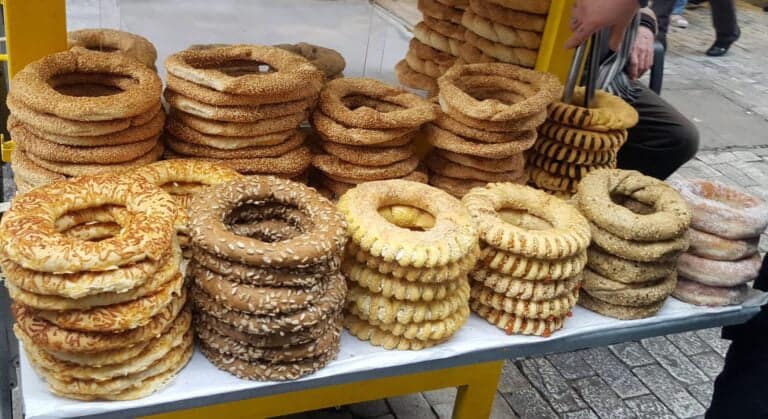
Koulouri er græsk madkultur og lækre street bagels Koulouri: Græske Bagels og Street Food Kultur Koulouri er en populær græsk street food, som minder om en bagel, men med sin egen unikke twist. Den er en af de mest elskede snacks i Grækenland, og du finder den næsten overalt – fra gaderne i Athen til…
Rejsen til Kos
Rejsen til Kos Rejsen til Kos er populær og med god grund. Den første men ikke uvæsentlige, er, at der er nemt at komme til denne græske ø. Alle der har brugt en dag eller mere på mellemlandinger og intern transit i Grækenland ved, hvad jeg taler om. Kom direkte rejser til den græske ø…
Lesbos
Grækenland er mere end sorte oliven. Hvad med en forstenet skov, varme kilder og næsten ingen turister og øen er kæmpe. Lesbos er et græsk rejsemål, når det er bedst, og i øvrigt Grækenlands tredjestørste ø. Og jeg besvarer lige et ikke stillet spørgsmål: Ja Lesbos har faktisk lagt navn til ordet lesbisk, lige som…
Fisketurisme på Kefalonia
Fisketurisme på Kefalonia Fisketurisme på den græske ø Kefalonia er ved at blive en populær aktivitet for familier og grupper på den maleriske ø, der ligger i det klare blå vand i Det Ioniske Hav. Denne nye trend fremmer bæredygtige fiskemetoder og bidrager til den blå økonomi, idet den blander kærlighed til fiskeri, havet, naturen…
Taverna som begreb har dybe græske rødder
Betydningen af “Taverna” 📄 Kort om den græske taverna Hvad er det: et uformelt, familiedrevet spisested — hjertet af græsk madkultur. Sådan spiser man: flere små retter (meze) i midten, som deles omkring bordet. Prøv: tzatziki, grillede grøntsager, frisk fisk, souvlaki og en karaffel lokal vin eller ouzo. Tempo: tag den med ro — et…
Græsk mad: Spis dig gennem Grækenland
Græsk mad fra Moussaka til Souvlaki er über sundt. Græsk mad er noget af det sundeste i hele verden. Undersøgelser viser, at på de mindre øer, hvor man stadig ikke spiser fast food, men nyder masse fisk og skaldyr og anvender god olivenolie og friske grøntsager, lever befolkningen rigtigt længe. Opskrifter og flere retter følger…
Grækenland største seværdigheder
Grækenland er rejselandet, du besøger igen og igen. Udforsk Grækenland som rejseland med fortryllende oplevelser: En rejseguide der også leder til den antikke histories hemmeligheder, de idylliske strande og mytiske landskaber. Oplev Grækenland på den rigtige måde, mens du begiver dig ud på en rejse gennem Grækenland. Traveltalk har mere end 50 artikler, videoer, rejseforslag…
Hvad skal du opleve på Korfu
Hvad skal du opleve på Korfu, en historisk og populær græsk ø Hvad skal du opleve på Korfu fra seværdigheder til spisesteder og lidt historie. Rejsen til Korfu er en af de mest royale rejsevalg til Grækenland, du kan vælge, få forklaringen herunder. Korfu seværdigheder Hvor skal du bo på Korfu? Så hvad skal du…
Feriebolig investering i Athen
Køb Feriebolig i Athen ? Feriebolig investering i Athen, Grækenlands historiske og kulturelle hovedstad, kan være en interessant mulighed på grund af byens rige arv, kulturelle betydning og stigende interesse fra turister og investorer. Athen tilbyder en blanding af gamle monumenter, moderne bekvemmeligheder og en livlig atmosfære, hvilket gør det til en spændende destination for…
Feriebolig investering i Grækenland
Feriebolig investering i Grækenland Feriebolig investering i Grækenland har været populært på grund af landets betagende skønhed, historie, kultur og det attraktive middelhavsklima. Grækenland tilbyder en bred vifte af destinationer, fra de populære øer til fastlandet, der appellerer til investorer, der ønsker at drage fordel af både lejeindtægter og potentialet for værdistigning. Det bør du…
- Europa | Ferieboliger | Frankrig | Grækenland | Italien | Kroatien | Portugal | Spanien
Feriebolig investering i Europa til glæde for hele familien
Feriebolig investering i Europa fra Spanien til Grækenland Feriebolig investering i Europa. Også kaldet Second home investering for fritidsejendomme som bekendt på engelsk. At investere i et sommerhus, helårshus eller lejlighed i Europa kan være en glimrende måde at diversificere din investeringsportefølje, opnå lejeindtægter og nyde et andet hjem sammen med din familie. Ideen dukker…
Skopelos, en af de mest kendte græske øer
Skopelos er en af de mest kendte græske øer. Mama Mia! Skópelos er en grøn og græsk bjergø i den græske øgruppe Sporaderne ud for Grækenlands østkyst. Skópelos er på 96 km² med 5.000 indbyggere; Hovedbyen hedder som øen Skopelos. Øen har ingen lufthavn, så man kommer til havnebyen Skópalos via en af øerne som …
Mest romantiske græske ø?
Santorini har udsigten, Mykonos har natten — men Naxos har freden, og det er tit den, par leder efter Mest romantiske græske ø for par? Det er svært i betragtning af, at der bogstaveligt talt er mere end 1.000 øer at vælge imellem og jeg tilføjer, at de fleste af dem er smukke og romantiske…








Our other sites – Travel around the world, wine shop from the winegrower to you, and “everything about wine”, on world sports such as tennis, golf and football.
Practical Travel Information for Greece
🛂 Visas and Entry
- Visa: no visa required for Danish citizens — Greece is an EU country in the Schengen Area. Enter on a valid passport or national ID card.
- No border checks within the Schengen Area when entering from Denmark.
💰 Currency and Money
- Currency: euro (EUR).
- Cards vs. cash: cards are accepted in towns and hotels; carry cash for tavernas, taxis and the smaller islands.
- Tipping: round up or give 5–10% in restaurants.
🚗 Transport, Time and Practicalities
- Flight time from Denmark: approx. 3–3.5 hours (direct flights to the mainland and several islands in summer).
- Getting around: ferries connect the islands; domestic flights serve the more remote islands.
- Time zone: +1 hour compared with Denmark.
- Language: Greek; English is widely spoken in tourist areas.
- Power: plug types C/F — as in Denmark.
- Tap water: drinkable on the mainland and in Athens; on many islands, bottled water is recommended.