
Twenty-one countries share the same sea.
Spain, Italy, and Greece. Those are the ones we visit, and there are good reasons to visit all three. But twenty-one countries border the Mediterranean, and the distances between them are shorter than the map makes them appear. It’s a half-hour ferry ride from Corfu to Sarandë in Albania. You can have lunch in Greece and arrive in a country that very few Danes have ever set foot in before coffee time.
That’s the simple idea behind this site. These countries share the sea—the climate, the olives, the fish, the long evenings, the same sun shining on the same limestone. We share this suggestion: try one of the others.
The sea is almost enclosed, and you can see that
The Mediterranean is connected to the Atlantic Ocean through the Strait of Gibraltar, which is about 14 kilometers wide at its narrowest point. That’s the entire connection. All the water supplied by rivers and rain isn’t enough to replace what the sun evaporates, so the sea constantly draws in Atlantic water through the strait to maintain its level.
Move with the tide in The Med
As a traveler, you notice the consequence, even though no one tells you about it. The tides are almost nonexistent. In most places in the Mediterranean, the water rises and falls by 20–40 centimeters per day, whereas in the North Sea, the range is one and a half meters or more. That’s why the harbors are laid out the way they are, with boats moored stern-to at the pier and the gunwale just a few meters from the water. That’s why the beaches stay in the same place all summer long. And that’s why you can see right through the water: not enough nutrients are coming in to make it murky. The exceptions are worth noting—in the northern Adriatic Sea around Venice and in the Gulf of Gabès off the coast of Tunisia, the tidal range is many times greater.
The sea has also been dry. Between 5.96 and 5.33 million years ago, the connection to the Atlantic Ocean closed off, and the Mediterranean Sea evaporated almost completely. Layers of salt several kilometers thick from that time still lie beneath the seafloor. Then the Atlantic Ocean broke through at Gibraltar again and filled the entire basin. Geologists are still debating how quickly this happened, but some calculations suggest years rather than millennia.
Try a country you haven’t visited yet
The shortest route to a different kind of vacation isn’t another hotel. It’s a different coast.
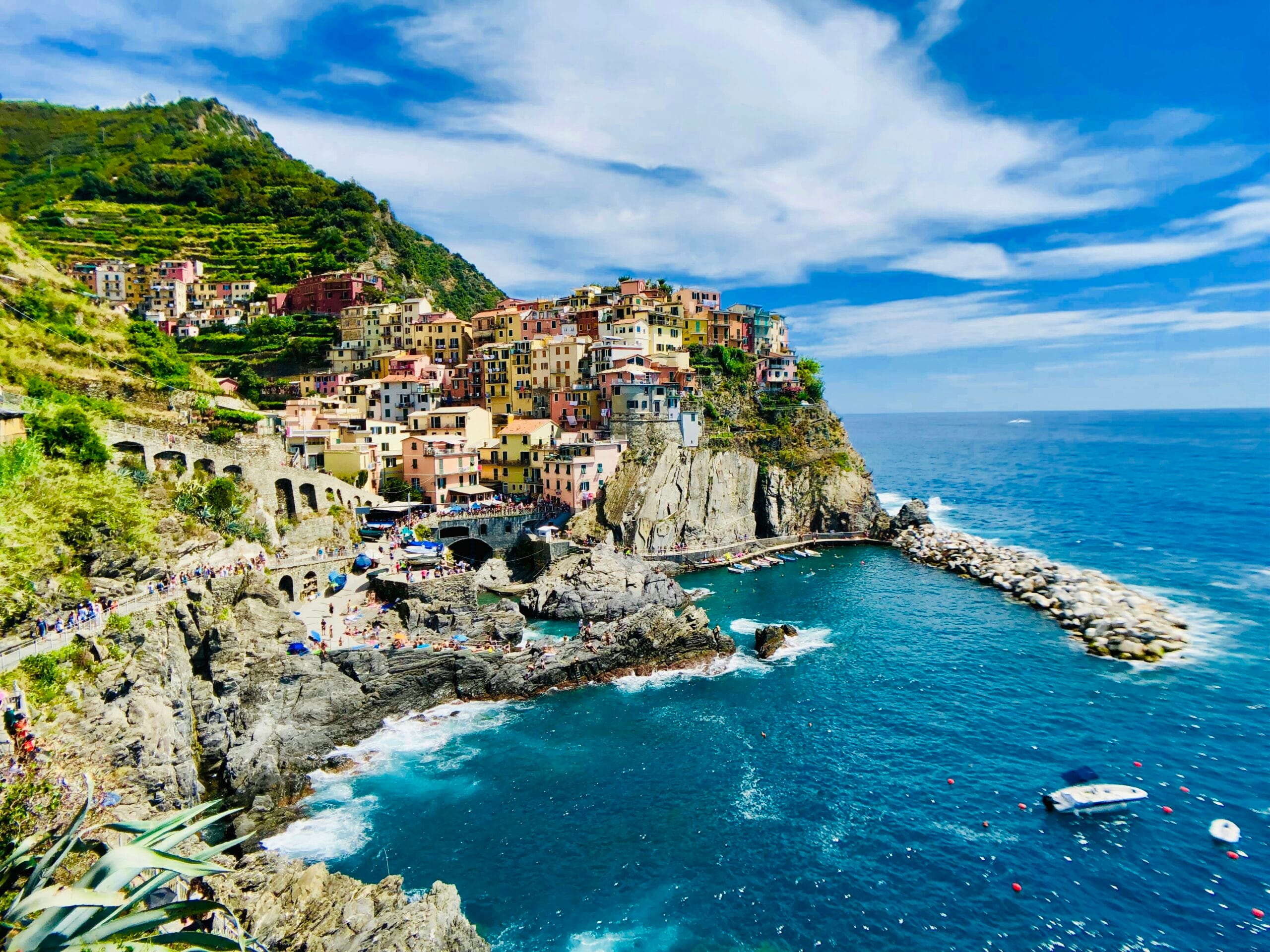
Albania has the stretch between Vlorë and Sarandë, which resembled the rest of the Mediterranean forty years ago, and the Roman port city of Butrint, a UNESCO World Heritage Site, lies at the southern tip. Montenegro has the Bay of Kotor, which cuts 28 kilometers into the mountains and resembles a fjord because, geologically speaking, it almost is one. Slovenia has only 46 kilometers of coastline in total, but Piran is located there, and the town is Venetian all the way down to the water’s edge.

The Albanian coast between Vlorë and Sarandë
Further east lies Cyprus, where you can ski in the Troodos Mountains in the morning and reach the coast in time for lunch, and where Nicosia remains Europe’s last divided capital. Malta consists of three inhabited islands, is home to Europe’s only Semitic language, and boasts a harbor that has been besieged twice in earnest. And on the African side, Tunisia has Carthage nestled within its own capital’s suburbs—the very Carthage that nearly defeated Rome.

And if you’re set on the big countries anyway
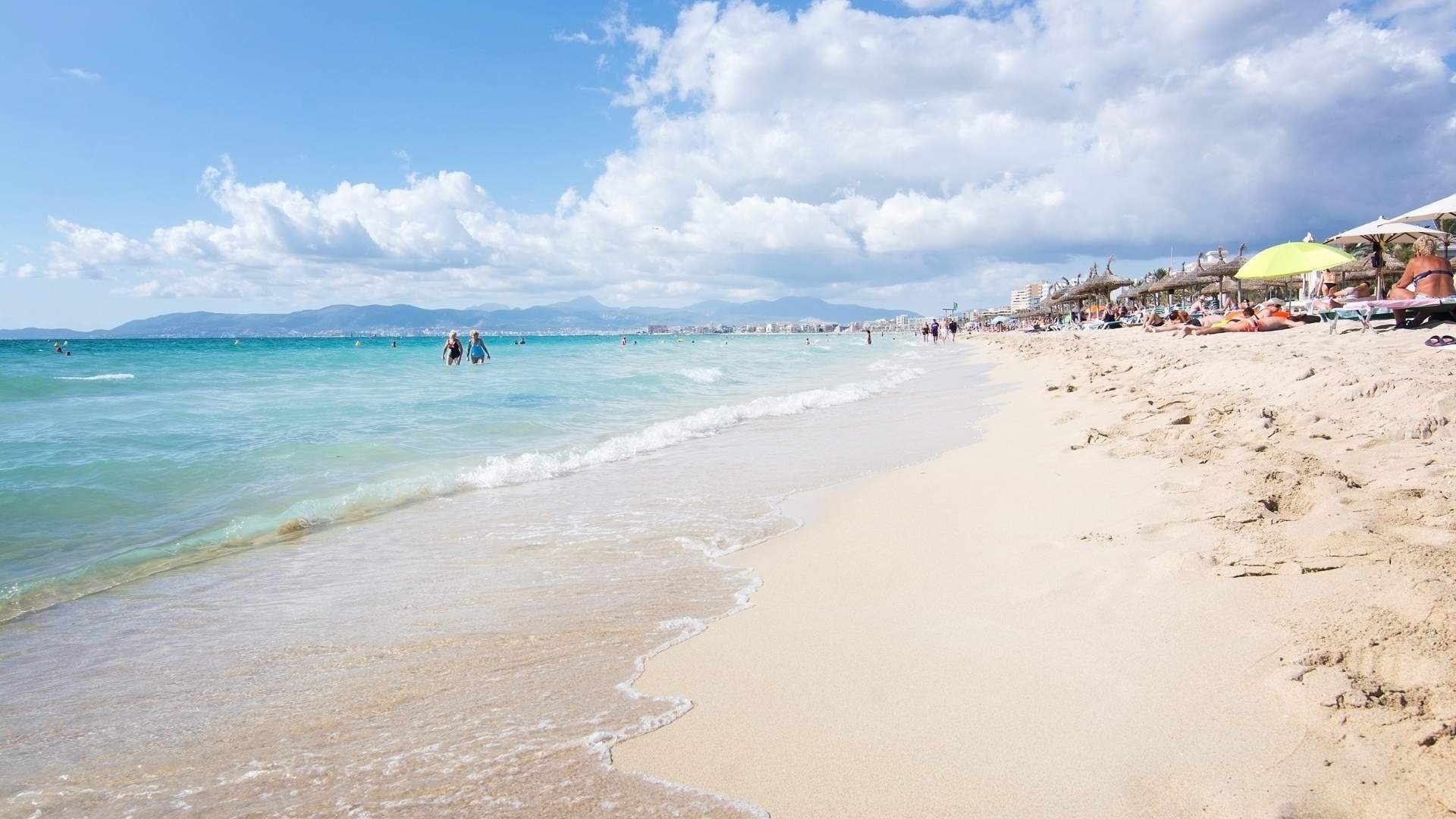
Then head a couple hundred kilometers inland. Italy isn’t just the Amalfi Coast; Puglia has the same sun, half the crowds, and a cuisine that’s even older. Spain isn’t just Palma; Es Trenc on Mallorca’s south coast is an undeveloped beach on an island everyone thinks they know. France isn’t just the Riviera; drive an hour up into Provence, and prices drop and the lavender fields begin. Greece isn’t just Santorini, and Turkey has an entire Aegean coast that Denmark knows almost exclusively from Bodrum.
You don’t have to fly twice to see two countries
The ferry network is the reason it makes sense at all to suggest a trip to a neighboring country. From the Italian Adriatic ports—Bari, Brindisi, and Ancona—there are routes to Greece, Albania, and Croatia, several of which are overnight sailings where the cabin replaces a hotel stay. From Barcelona and Valencia, you can sail to the Balearic Islands in just a few hours. And from Genoa and Civitavecchia, you can reach Sardinia, Sicily, and on to Tunis.
This changes how a vacation can be put together. Two weeks don’t have to mean one place and one airport. It could be a week in Puglia, a ferry ride across, and a week on a coast none of your neighbors have visited.
The season is much longer than the school summer break
This is where most Danish Mediterranean vacations end up being more expensive and less enjoyable than they need to be. The sea around the eastern and southern coasts is already 18–19 degrees in April and remains around 24 degrees in November. July and August are the two months when it’s most expensive, most crowded, and—inland—hottest. Nicosia, Seville, and Athens regularly hit over 40 degrees.
May, June, September, and October offer the same sea, a third fewer people, and temperatures that let you walk around a city in the middle of the day. If you’re traveling in the height of summer, stick to the coast, where the sea breeze blows.
What the brochure doesn’t say
The most popular destinations along the Mediterranean have started charging for the crowds, and the fees are now high enough to factor into your budget. Venice charges 5–10 euros from day-trippers on the busiest days and has redirected cruise ships over 25,000 metric tons to the industrial port of Marghera. Santorini and Mykonos charge 20 euros per cruise passenger who disembarks during the high season from June 1 to September 30, compared to 5 euros at other Greek ports. On top of that, Santorini has capped the number of cruise passengers at 8,000 per day and will tighten this limit further by 2026.
This is not a warning against visiting these places. It’s a piece of information that points in the same direction as everything else on this page: travel outside the high season, and preferably to a neighboring country. The places that have had to introduce entry fees are precisely the places everyone else has chosen as well.
The Sea as a Mode of Travel
The lack of tides makes the Mediterranean one of the easiest places in the world to rent a boat. You don’t have to worry about currents or falling tides to enter a harbor; the distances between the islands are short, and there’s a town with a dock almost everywhere. That’s why the charter fleets are where they are—in Croatia, Greece, and Turkey.
We’ll explore that part of the Mediterranean on a sailing vacation, and the larger ships on a cruise. Both are ways to see five countries in a week without unpacking five times.
The cuisine is on UNESCO’s list
The Mediterranean diet was added to UNESCO’s list of Intangible Cultural Heritage in 2010, along with Greece, Italy, Morocco, and Spain, and in 2013, Croatia, Cyprus, and Portugal were included. What’s been recognized isn’t a collection of recipes. It’s the way of life: how crops are harvested, fish are caught, food is preserved and prepared—and, above all, the tradition of eating together.
It’s also the most concrete reason to travel beyond the three usual destinations. Olive oil tastes different from Puglia to the Peloponnese to Sfax, and these are nuances you can’t learn about just by reading. More on exploring the region through food and wine.
Map of the Mediterranean
The Mediterranean in a Nutshell
📄 Quick Facts
- Area: approximately 2.5 million km²—roughly 58 times the size of Denmark.
- Maximum depth: approximately 5,100 meters at the Calypso Trench off the coast of Greece.
- Countries with coastlines: 21, spread across three continents.
- Connection to the open ocean: the Strait of Gibraltar, approximately 14 km at its narrowest point.
- Tides: typically 20–40 cm. Exceptions: the northern Adriatic Sea and the Gulf of Gabès.
- Swimming season: April through November on the southern and eastern coasts.
💡 Traveltalk tip
Plan your trip for September rather than July. The water is warmer in September than in June—the sea spends the entire summer warming up and the entire fall cooling down again. At the same time, prices have dropped, and the cities are more pleasant to be in during the middle of the day. It’s the simplest decision you can make to make your Mediterranean vacation noticeably better.
🤝 Travel Partner
We have an opening. If you’re a tourist office, cruise line, charter fleet, or specialist with the Mediterranean as your core area, we’d love to hear from you. Contact the editorial team.