Christmas Around the World: How Christmas Is Celebrated Around the Christian World
If you're planning your Christmas holiday, this guide will give you a comprehensive overview of how Christmas is celebrated around the world – and where you can experience the most unique traditions. Christmas and the Christmas holidays may be the world's most widespread cultural events, but the way it is celebrated varies significantly from country to country. From the magical Christmas markets in the Alpine countries to the surprising traditions of Japan – Christmas is both universal and deeply local at the same time. In this comprehensive guide, we take you on a journey through the many faces of Christmas around the world.
Germany and Austria: Home of the Classic Christmas Holiday
When talking about traditional European Christmas, you can't avoid Germany and Austria. This is where many of the traditions we know today have their roots – from the Christmas tree to the advent calendars and the legendary Christmas markets. For many, a Christmas holiday in Germany or Austria means classic traditions and cozy markets.
German Christmas Markets – A Tradition Since the Middle Ages
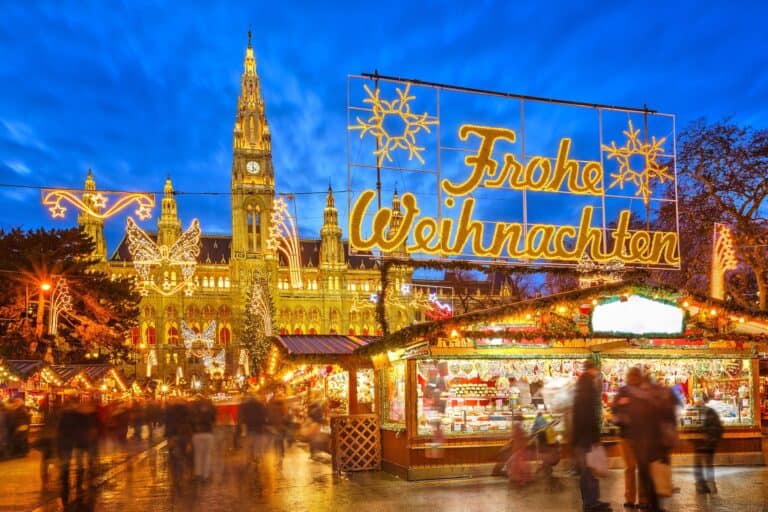
The Christkindlmarkt, as Christmas markets are called in Germany, is something special. The most famous one takes place in Nuremberg, where wooden stalls filled with handmade gifts, traditional gingerbreads like lebkuchen and the ever-popular glühwein (hot spiced wine) create an unforgettable atmosphere. The city's history as a toy manufacturer shines through, and a cozy, woody atmosphere permeates the fields.
Christmas markets are not a new invention – they date back centuries and represent a living link to the past. In Germany, families gather throughout December to enjoy the holiday together. Children hang the last Christmas decorations on the tree on Christmas Eve, called Heiligabend, and gifts are not opened until Christmas Day.
Christmas in Italy with delicious food and beautiful traditions
Austria: “Silent Night” and Traditional Alpine Coziness
Austria, which gave us the beloved Christmas carol “Silent Night,” celebrates Christmas with a distinctly Alpine charm. The song was first sung in 1818 in a small chapel near Salzburg, accompanied only by a guitar. The story goes that the local priest was so moved by the silent, starry night after blessing a newborn child that he wrote the poem on the spot.
Merry Christmas, Lovely Christmas! Do you know where the hymn comes from?
In the Austrian Alps, traditions hold up stronger than in most places in Europe. The Christmas tree is kept secret from children until Christmas Eve – a magical moment when the tree is finally revealed with all its lights and decorations. St. Nicholas Day on December 6th is an important part of the preparations, when children place their shoes in front of the door in the hope that they will be filled with nuts, chocolate and tangerines.
Christkind and Krampus – Christmas Gift-Bringing and His Opposite
In German-speaking countries such as Germany, Austria, Switzerland and parts of the Czech Republic, it is Christkind – the baby Jesus, often depicted as a female angel – who brings the gifts on Christmas Eve. Christkind is invisible and rings a bell just before leaving to let children know that the tree and gifts are ready.
We don't really know Krampus. But there is also a darker side to Austrian Christmas tradition: Krampus. This half-goat, half-demon with fur, horns and teeth accompanies Saint Nicholas throughout the Christmas season and punishes naughty children by scaring them. The Krampus tradition also exists in Slovenia, Germany, the Czech Republic and Hungary and symbolizes the darker side of the holiday season.
The Taste of Christmas in German-Speaking Countries
Culinary tradition is central to both Germany and Austria. Christmas Eve is often a day of fasting, and when the evening arrives, festive meals are served that vary from region to region. In Austria, people typically eat carp, fish, goose or Wiener schnitzel with Kaiserschöberl soup.
Christmas cookies are a big part of the preparations. Families bake vanillekipferl (small crescent-shaped cookies), lebkuchen (spicy gingerbread), and husarenkrapferl (almond cookies with jam). Stollen, the traditional fruit cake, is shared among family and friends throughout December.
Italy: La Vigilia and the Great Christmas Dinner
Italy celebrates Christmas over three big days, and each day has its own traditions and special meals. Italian Christmas is all about abbondanza – abundance – and families gather for festive meals that can last 6-7 hours. That’s why many travelers choose Italy as their destination for Christmas holidays and culinary experiences.
Christmas Eve: La Vigilia di Natale
December 24th is La Vigilia – the Vigil. Originally a fast day before the big Christmas dinner, the tradition now centers heavily on seafood and fish. This Roman Catholic ritual is deeply rooted in Italian homes around the world, including among Italian-Americans.
The tradition began in Southern Italy, where fresh seafood was abundant. The Italian-American version is affectionately called the “Feast of the Seven Fishes” and may include swordfish, tuna, salmon, octopus salad, herring, squid, spaghetti with clams, and the famous salted cod, baccalà.
While in the United States it has often become a lavish feast, many Italian families still keep the tradition of a more modest, meat-free meal before midnight mass.
Christmas Day: The Big Lunch
December 25th is the most important of the Christmas meals in Italy. Unlike the fish-focused Christmas Eve meal, this meal is meat-based and can last for hours. It typically begins around noon and extends well into the afternoon.
The meal starts with antipasti – sliced cheeses and salami, marinated vegetables, olives and regional specialties. This is followed by the primo piatto (first course), which is often pasta. In southern and central Italy, baked pasta is a must – lasagna, stuffed manicotti or ravioli. In northern Italy, tortellini in brodo (meat-stuffed pasta rings in golden broth) is a classic from Emilia-Romagna.
The main course, secondo piatto, varies by region. In Lombardy, capon (castrated rooster) stuffed with walnut or chestnut filling is traditionally served. Other popular choices include roast veal, baked chicken, sausages or braised beef. In Veneto, polenta is combined with seasonal cod, while Liguria presents the spectacular Cappon Magro.
La Befana: The Italian Christmas Gift-Bringer
While many countries have their presents on December 24th or 25th, Italian children also eagerly await the arrival of La Befana on January 5th. She is an old witch-like figure who, according to legend, is still searching for the baby Jesus. She visits all children at night and fills stockings with small gifts and sweets for the good children – and coal for the naughty ones.
La Befana is a beloved figure in Italian culture, and her visit marks the final end of the Christmas holiday – Epiphany.
Spain: Long Christmas and the Three Kings
In Spain, the Christmas season begins on December 8th with the Feast of the Immaculate Conception and lasts until January 6th – Día de los Reyes Magos, the Day of the Three Kings. Spain celebrates Christmas as perhaps the most traditional, family-oriented holiday in the world.
Christmas Food in Spain
A Christmas holiday in Spain offers intense flavors and deep family traditions. As in Germany, the most important night is December 24th, when restaurants and hotels offer extraordinary menus for the celebration. Christmas dinner typically begins with an enormous selection of starters – Iberian ham, a wealth of rich cheeses, seafood, preserves, pickled vegetables and elaborate specialties prepared especially for the holiday.
Then comes the first course, which is often a stew or broth. Andalusian stew, Catalan escudella (traditional meat stew with sausage), garlic soup in Castilla-La Mancha, almond cream in the Balearic Islands or trout soup in Castilla y León are among the most popular.
The main course often consists of roasted meat – especially lamb, suckling pig or Ternasco lamb, ideally cooked in a wood-burning oven. Oven-roasted fish such as bream or sea bass are also popular choices. The traditional Pavo Trufado de Navidad (Christmas turkey with truffles) is served before midnight mass, “La Misa Del Gallo” (Mass of the Rooster), named after the legendary cockcrow night on which Christ was born.
The Sweet Taste of Christmas
Sweet is the flavor that defines Christmas in Spain. The list of treats for those with a sweet tooth is huge, and each region has its own specialties. Turrón (nougat), cookies, marzipan, and of course Rosca de Reyes (Epiphany cake) are mandatory.
The rosca is special – inside the cake is a small figurine, and whoever finds it in their slice will have good luck all year long. Although it can be enjoyed throughout the holiday, the most traditional way to eat it is on the afternoon of January 5th (during the Epiphany parade) or January 6th, after the Three Kings have left gifts for all the children.
Las Doce Uvas: 12 Grapes for Happiness
One of Spain's most famous New Year's traditions is to eat 12 grapes for good luck – one for each stroke of the clock as it strikes midnight on December 31. According to tradition, if you manage to eat all the grapes in time, you will have a year filled with prosperity and luck.
If you really want to make the most of it, experience it in person at Puerta del Sol in Madrid (remember to arrive at the square a few hours early). In most Spanish cities, you eat grapes at one of the city's landmarks.
France: Réveillon and Gastronomic Excellence
France is a popular choice for a Christmas holiday due to its gastronomy and elegant traditions. In France, Christmas is synonymous with exquisite gastronomy and fine wine. The French indulge in a grand feast on Christmas Eve, known as “Le Réveillon”. Dishes such as foie gras, oysters and a host of decadent desserts are on the menu.
However, the tradition is changing, and many now celebrate on either December 24 or 25 – or both. It is not uncommon for couples to have two Christmas dinners, spending Christmas Eve with one family and Christmas Day with the other.
French nativity scenes, called “crèches,” are a popular Christmas decoration, and they can be incredibly detailed and artistic – especially the Provençal crèches with hand-painted terracotta figures called santons.
Great Britain and Ireland: Royal Christmas and Traditional Charm
The UK and Ireland are obvious destinations for a classic European Christmas holiday. Christmas traditions in the UK are steeped in history and charm. People decorate their homes with holly, mistletoe and of course the Christmas tree. One of the most iconic British customs is the Christmas cracker – a colourful paper tube filled with small gifts and jokes that is pulled apart to reveal surprises during Christmas dinner.
The Royal Christmas speech is also a beloved tradition, where the monarch addresses the nation on Christmas Day. Christmas dinner typically consists of roast turkey with all the trimmings, followed by Christmas pudding, mince pies and Christmas cake.
Scandinavia: Coziness, Christmas and Old Traditions
If you want a truly Nordic Christmas holiday, Sweden, Norway and Finland are among the most atmospheric places.
Sweden: Lucia and Christmas table
December 13th marks Saint Lucia Day, one of Sweden's most beloved traditions. The eldest daughter in the family becomes Saint Lucia, wearing a white dress and a garland of candles, and serves saffron buns and coffee to the family.
Christmas in Sweden is celebrated with a sense of coziness – hygge. A traditional Swedish Christmas Eve includes a smörgåsbord of dishes such as herring, meatballs and sausages. Julbord is a sumptuous buffet meal of herring, salmon, meatballs and glögg (mulled wine). Christmas Eve, julafton, is the main day for gift-giving and festive dinners.
Finland: Christmas sauna and Joulupukki
Finnish families cleanse and relax in the sauna on Christmas Eve – a tradition that goes back many generations. Rovaniemi in Lapland is the official home of Santa Claus, Santa Claus Village, and is a popular destination for the magic of Christmas.
Norway: Kransekake and Christmas traditions
Norway presents kransekake, a magnificent Christmas dessert. This towering almond cake in rings is a culinary masterpiece that adds grandeur to the Christmas feast.
Eastern Europe: Rich Traditions and 12 Dishes
A Christmas holiday in Eastern Europe provides an exciting insight into old rituals and strong family traditions.
Poland: Wigilia
In Poland, Wigilia – the Christmas Eve meal – is a sacred event. Traditionally, it consists of 12 meatless dishes, symbolizing the 12 apostles. Dishes include carp, beetroot soup (barszcz), pierogi and makówki (poppy seed cake).
The meal only begins when the first star is seen in the sky, and an extra envelope is always placed for an unexpected guest or for the deceased.
Czech Republic and Slovakia
In these countries, Ježíšek (Baby Jesus) brings the gifts. Fried carp with potato salad is the traditional Christmas dinner. In the Czech Republic, there is a special tradition for single women – throwing a shoe over their shoulder to predict the direction to their future spouse’s home!
Hungary: Fish soup and Chimney cake
Hungarian Christmas customs mix traditional Christmas markets with hearty dishes like stuffed cabbage and chimney cake (kürtőskalács). Halászlé, the famous Hungarian fish soup, is a Christmas specialty, often paired with Tokaji Furmint wine.
Greece: Christopsomo and Theophany
Christmas in Greece is a time for celebration and feasting. Traditionally, the main course is roast pork with various side dishes, although roast turkey has also become popular. On Christmas Eve, many Greeks bake Christopsomo – a bread with a cross carved into the top of the crust before baking.
On Christmas Day, the head of the family makes the sign of the cross over the bread, cuts it, and gives a piece to each person at the table. The festive season does not end until well after New Year's with the holiday of Theophany, when water is blessed throughout Greece and a cross is thrown into the water. Brave Greeks dive into the icy water to retrieve the cross for good luck.
Iceland: Jólakötturinn and The 13 Santa Clauses
Iceland has some of the most unusual Christmas traditions in Europe. The Jólakötturinn – the Christmas Cat – is a terrifying cat from Icelandic folklore. He is said to eat anyone who doesn’t receive new clothes for Christmas!
The 13 days leading up to Christmas are marked by visits from the 13 Yule Lads. Children place their shoes by the window each night and receive sweets for good behavior or rotten potatoes if they have been less than angelic.
Japan: A Very Special Christmas Tradition
Japan has become a surprisingly popular holiday destination thanks to the country's unique traditions. Even though less than 2% of Japan's population is Christian, the country has developed its own unique Christmas traditions—and the most famous of them involves Kentucky Fried Chicken.
How KFC Became a Japanese Christmas Tradition
It all started in the early 1970s, when the first KFC store in Japan opened in Nagoya in 1970. The manager, Takeshi Okawara, overheard an American customer saying that they missed eating turkey at Christmas and that chicken was the next best alternative. This gave Okawara an idea.
In 1974, KFC launched the “Kentucky for Christmas” (Kurisumasu ni wa Kentakkii) campaign with the slogan “Kentucky is Christmas!” The campaign was a resounding success. The ads positioned KFC as an elegant, authentic way to celebrate Christmas in true American style – even if it didn’t quite match the reality in the United States.
Christmas in Japan Today
Today, an estimated 3,6 million Japanese families order KFC for their Christmas dinner. Pre-orders start in early November and typically close in mid-December. Customers are assigned days and times for pickup at various KFC locations to control queues, with most picking up between December 24 and 26.
December 24th is the busiest day of the year for KFC Japan – ten times busier than an average day. Colonel Sanders statues are dressed in Santa costumes and special Christmas menus are sold, including chicken, dessert and sometimes lobster lasagna or other luxury dishes.
Christmas is not an official holiday in Japan, and many treat the day as a couple-oriented holiday rather than a family-oriented one. This made KFC an easy option – quick to order and perfect for bringing people together. At the same time, KFC’s fried chicken resembles the popular Japanese dish karaage (breaded, deep-fried pieces of meat), so the taste was not foreign to the Japanese.
Other Japanese Christmas Traditions
Besides KFC, strawberry shortcake is the Japanese Christmas dessert. The cake is light, airy and decorated with white whipped cream and fresh strawberries – perfect for couples and families.
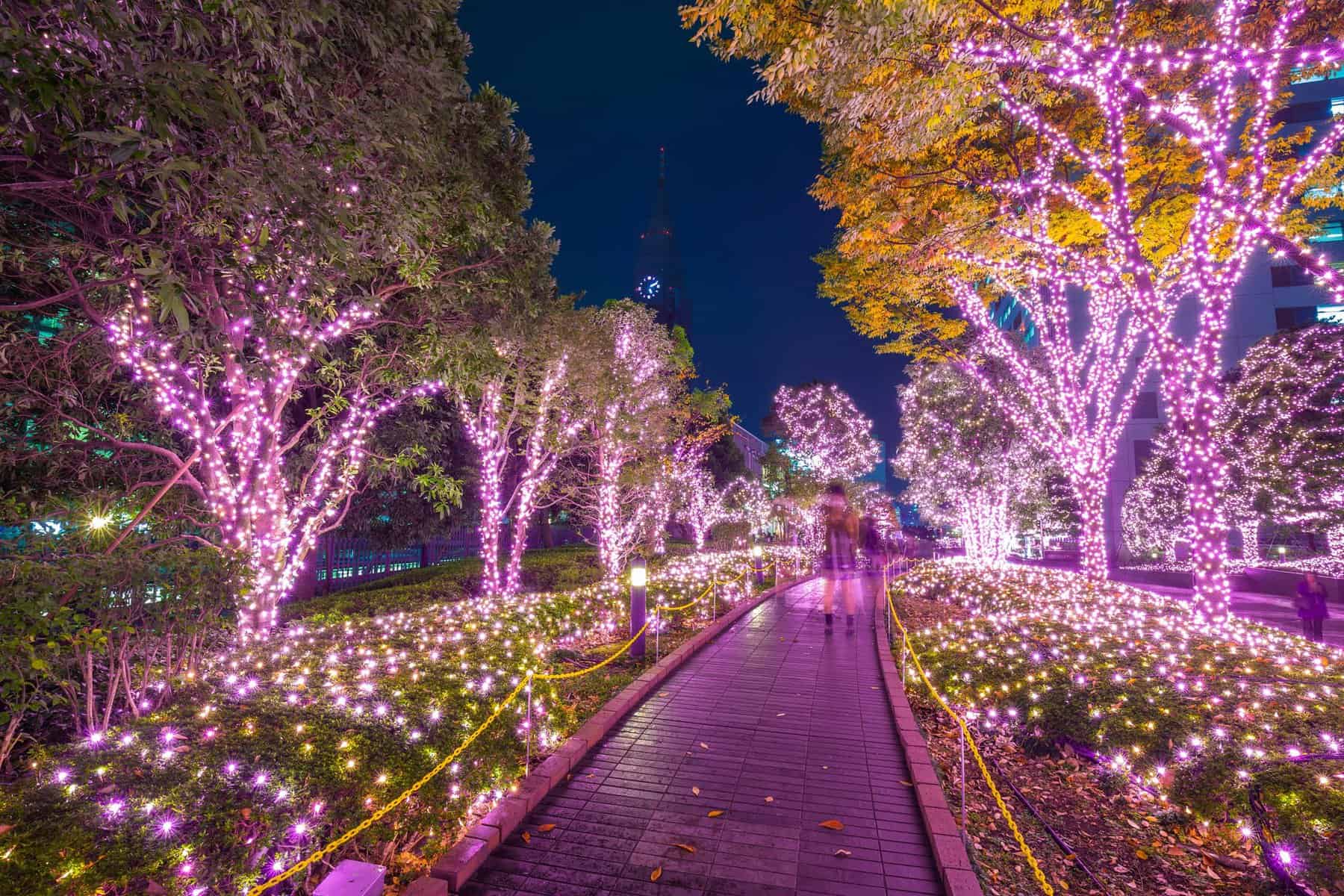
Unlike in the United States, where Christmas Eve is spent with family, Japanese couples go out on romantic dates. Many enjoy elegant restaurants, city illuminations, and romantic promenades. Popular restaurants and hotels are often booked weeks in advance.
USA and Canada: Christmas in the New World
A Christmas vacation in North America combines classic traditions with modern culture and big-city glamour.
In North America, Christmas traditions are heavily influenced by both British roots and the many immigrant groups who have brought their customs with them. Classic American Christmas includes a Christmas tree, stuffed turkey, mashed potatoes, cranberry sauce, and pumpkin pie or pecan pie.
In Canada, similar traditions exist with some variations – especially in French-speaking areas like Quebec, where Réveillon is still celebrated. Canadians believe that Santa Claus lives at the North Pole – in Canada – and thousands of letters are sent to Santa Claus every year to the postal code H0H 0H0.
Latin America: The Warmth and Colors of Christmas
Latin America offers a colorful and warm Christmas holiday filled with music, dance, and local rituals.
Mexico: Las Posadas and Piñatas
Mexico's Las Posadas recreates Mary and Joseph's search for shelter in Bethlehem. With processions, songs and piñata-crushing, it's a heartwarming and joyful tradition celebrated in the nine days leading up to Christmas.
Venezuela: Roller Skates for Christmas Fair
In the Venezuelan capital Caracas, it is a tradition to go rollerblading to the early morning mass on Christmas morning! The streets are closed to car traffic to make room for the many rollerblading enthusiasts.
South America: Summer-Christmas
In South America and the Southern Hemisphere in general, Christmas falls in the middle of summer, which creates unique traditions. In Argentina, Chile and Brazil, it is common to have parrilladas (barbecues), enjoy the beach and celebrate outdoors.
In Brazil, Papai Noel (Santa Claus) is still popular, but his red velvet suit is often replaced by lighter materials! Missa do Galo (Rooster's Mass) is celebrated at midnight between December 24th and 25th, and families gather for large feasts of bacalhau (salted cod), turkey, rabanada and pandoro.
Australia and New Zealand: Christmas Vacation on the Beach
For those seeking sun and summer, a Christmas holiday in Australia or New Zealand is the obvious choice.
In the Southern Hemisphere, Christmas means sun, beach and barbecue. In New Zealand, the tradition of “barbies” (barbecue sessions) on the beach is very popular. Australians often enjoy an outdoor Christmas with barbecued meats, fresh seafood and pavlova for dessert.
Many Australians start the day with Carols by Candlelight – outdoor concerts where thousands gather to sing Christmas carols under the stars. Boxing Day, December 26, is a big event in Australia with the start of the Test Cricket season and huge sales.
Middle East: Christmas in the Birthplace of Jesus
A Christmas holiday in the Middle East offers the opportunity to experience the historical roots of Christmas up close.
Bethlehem and Jerusalem
In Bethlehem, where Jesus was born, Christmas is a particularly sacred event. The Church of the Nativity, built over the grotto where Jesus is believed to have been born, attracts pilgrims from all over the world. The midnight mass on Christmas Eve is broadcast globally and is a deeply moving experience.
The Palestinian Christian population celebrates Christmas on December 25 (Catholics and Protestants) or January 7 (Orthodox), depending on the calendar. The celebration includes masses, family meals, and traditional dishes such as maqluba (a rice dish with meat and vegetables) and ka'ak (sweet breads with dates).
Lebanon
In Lebanon, a large Christian population celebrates Christmas with great enthusiasm. Christmas trees, lights, and nativity scenes adorn Beirut and other cities. Traditional dishes include tabouli, hummus, kibbeh, and sweet treats such as baklava and ma'amoul.
Africa: Diverse Traditions on a Large Continent
Africa offers a Christmas holiday filled with strong traditions, sun and cultural diversity.
Ethiopia: Ganna
The Ethiopian Orthodox Church celebrates Christmas (called Ganna) on January 7. The celebration includes a long night mass, with the congregation standing throughout the 3-hour ceremony. Afterwards, many play the traditional game of ganna, which is similar to hockey.
South Africa: Braai and Carolling
South Africans celebrate Christmas in the middle of summer, so outdoor braais (barbecues) are the norm. Carol singing is very popular, and many communities hold outdoor Carol events. Traditional dishes include bobotie (spicy stuffed meat), yellow rice, and malva pudding.
Ghana: Christmas Street Festivals
In Ghana, Christmas is a time for grand street processions, dancing and music. Fantastically colorful costumes, dancing and traditional drumming mark the holiday. Families gather for festive meals of fufu, jollof rice and roasted chicken or goat.
Philippines: The World's Longest Christmas
The Philippines claims to have the world's longest Christmas season – it starts as early as September! This predominantly Catholic country celebrates Christmas with great enthusiasm. Simbang Gabi is a series of nine early morning masses that start on December 16th and end on Christmas morning.
The Giant Lantern Festival in San Fernando is a spectacular sight with huge, colorful lanterns lighting up the night. Noche Buena, the midnight meal on Christmas Eve, includes lechón (roast pig), bibingka (rice cake), and puto bumbong (purple rice cake).
How to Travel During Christmas
If you are planning a Christmas holiday abroad, there are special things you need to be aware of.
Plan in Good Time
If you want to experience Christmas abroad, early planning is essential. Popular destinations like German Christmas markets, Bethlehem or Lapland can be booked months in advance. Book flights, hotels and special events as early as possible.
European Christmas Markets
The best European Christmas markets typically open in late November and run until just after New Year's. Among the most famous are:
- Nuremberg, Germany – Christkindlesmarkt, the most traditional
- Vienna, Austria – 20+ Christmas markets spread across the city
- Salzburg, Austria – Alpine elegance and “Silent Night” heritage
- Strasbourg, France – “The Capital of Christmas”
- Prague, Czech Republic – Old town charm and trdelník
- Dresden, Germany – Striezelmarkt, one of the world's oldest
- Bruges, Belgium – Cozy marketplace and Belgian chocolate
Winter destinations
For those seeking snow and winter sports, the Alps offer the perfect Christmas getaway. Austrian ski resorts like Ischgl, St. Anton and Kitzbühel combine fantastic skiing with traditional Christmas spirit. Swiss destinations like Zermatt and St. Moritz offer luxury and alpine panoramas.
In Scandinavia, Lapland in Finland and Sweden offers unforgettable Christmas trips with visits to Santa Claus, dog sledding, the Northern Lights and ice crystal crafts.
Sun and Heat Christmas Association
Prefer sun to snow? The Canary Islands, South Africa, Australia and Southeast Asia offer warm Christmas destinations. Thailand, the Philippines and Bali have also developed their own Christmas traditions, often with festive events in hotels and resorts.
Respect Local Traditions
When traveling during the Christmas season, it is important to respect local traditions and customs:
- Religious ceremonies: If you attend mass or religious events, dress appropriately and behave respectfully
- Photography: Always ask permission before taking photographs in churches or during religious ceremonies
- Opening hours: Many shops, restaurants and attractions close on Christmas Day and Boxing Day – plan accordingly
- Booking: Christmas fairs, midnight fairs and special events may require advance booking
- Respect for tradition: Some traditions are sacred to locals – participate with respect and humility
Conclusion: The Universal Message of Christmas
No matter where in the world you choose to spend your Christmas holidays, the holiday season is about community, family and celebrating light in the dark. Whether it's with German glühwein at a Christmas market, Italian Feast of Seven Fishes, Japanese KFC, Spanish turrón or Australian beach barbecue – the holiday season is about community, family and celebrating light in the dark.
Every country, every region, even every family has its own way of celebrating Christmas, and it is this diversity that makes the holiday so fascinating. From the deep religious roots of Christian countries to the secular, but no less significant, celebrations in Japan, Christmas shows how a tradition can be adapted and shaped by local culture, while preserving its universal spirit.
Experiencing Christmas in different parts of the world is one of the most enriching travel experiences you can have. It not only provides insight into other cultures and traditions, but also reminds us of what really matters: being with those we love, sharing meals, creating memories, and celebrating life even in the midst of the darkness of winter.
Merry Christmas – or as they say around the world: Frohe Weihnachten, Buon Natale, Feliz Navidad, Joyeux Noël, Merry Christmas, メリークスマス (Merii Kurisumasu), God Jul, Καλά Χριστουγένα (Kala Christougenna) – may your Christmas holiday be filled with joy, love and unforgettable moments, no matter where in the world you celebrate it!
More articles about Christmas holidays
Disneyland Paris — The Ultimate Guide 2025/2026
Two parks, half an hour from Paris — and the weeks when the lines are shortest and the prices are lowest Disneyland Paris is Europe's largest Disney destination and an obvious option for Danish travelers who want the Disney magic without long flights. This article serves as your complete Disneyland Paris ultimate guide to planning a magical and hassle-free…
Christmas in Japan, a fusion of Christmas between East and West
Christmas in Japan – a different but fascinating Christmas tradition Christmas in Japan is a unique blend of Western Christmas elements and Japanese customs. Although Christmas is not a public holiday, it is still celebrated on December 24th and has developed into a festive, romantic and colorful event marked by lights, food and popular culture. When is Christmas celebrated in…
Christmas in Germany
Christmas in Germany – Christmas markets, mulled wine and old traditions Christmas in Germany is the epitome of coziness, the smell of roasted almonds and the ringing of church bells. Germans take Christmas seriously, and in December the entire country is transformed into a Christmas landscape filled with lights, markets and old traditions that have inspired the rest of Europe for centuries. German Christmas markets and atmosphere…
Christmas all over the world
Christmas around the world – how the holiday is celebrated across cultures Christmas around the world is a fascinating phenomenon. From snowy towns in Europe to sunny beaches in Australia and bustling cities in Asia, millions of people celebrate Christmas – each in their own way. Some do it out of faith, others for the sake of community and…