
Cycling holidays in and outside Denmark
Cycling holidays are extremely popular here. No wonder. We have perhaps the world's best cycling infrastructure, and we have a successful cycling culture with lots of victories over the years at the highest level from track racing to mountain biking. We are really good at pedaling.

More bikes than cars in Copenhagen
We in Denmark have more cyclists than motorists in e.g. Copenhagen. Somewhere in our collective DNA, the bicycle is firmly established and shapes us in so many positive ways: health, experiences, togetherness. Holiday trips with the bike in focus in Denmark have been around for many years and are still a hit, but now we see a very interesting and nuanced travel pattern. Cycling holidays range from "Copy Tour de France" aka cycling hardships, endurance races in the Dolomites to less demanding and eventful cycling trips in countries as far away as Vietnam and Nepal.

Cycling holiday in the Austrian Alps?
In Austria as a good example, they take sport and tourism quite seriously in a good way and deliver on the concept with some fantastic routes for all mountain bikers from those in reasonable shape to those who want serious altitude meters in their lungs and legs.
Experience the Zugspitz from a bird's eye view or by mountain bike
See here Kitzbühler in Tyrol, a cycling holiday as an appetizer. “Cycling holidays” have become international as a form of holiday, and traveltalk.dk follows the most interesting developments with inspiration, cycling holiday experiences and picks goodies for you here.
Five countries in 12 days: cycling through the British Isles
Start in the Yorkshire Dales, cross Snowdonia in Wales, take the ferry to Dublin, cycle the Irish west coast in County Donegal, and continue along the Antrim coast past the Giant's Causeway to Scotland – 750km across five countries and 12 days, arranged end to end. The ultimate 5-country cycling holiday
Good legs, good holiday!
Other travel suggestions for active holidays
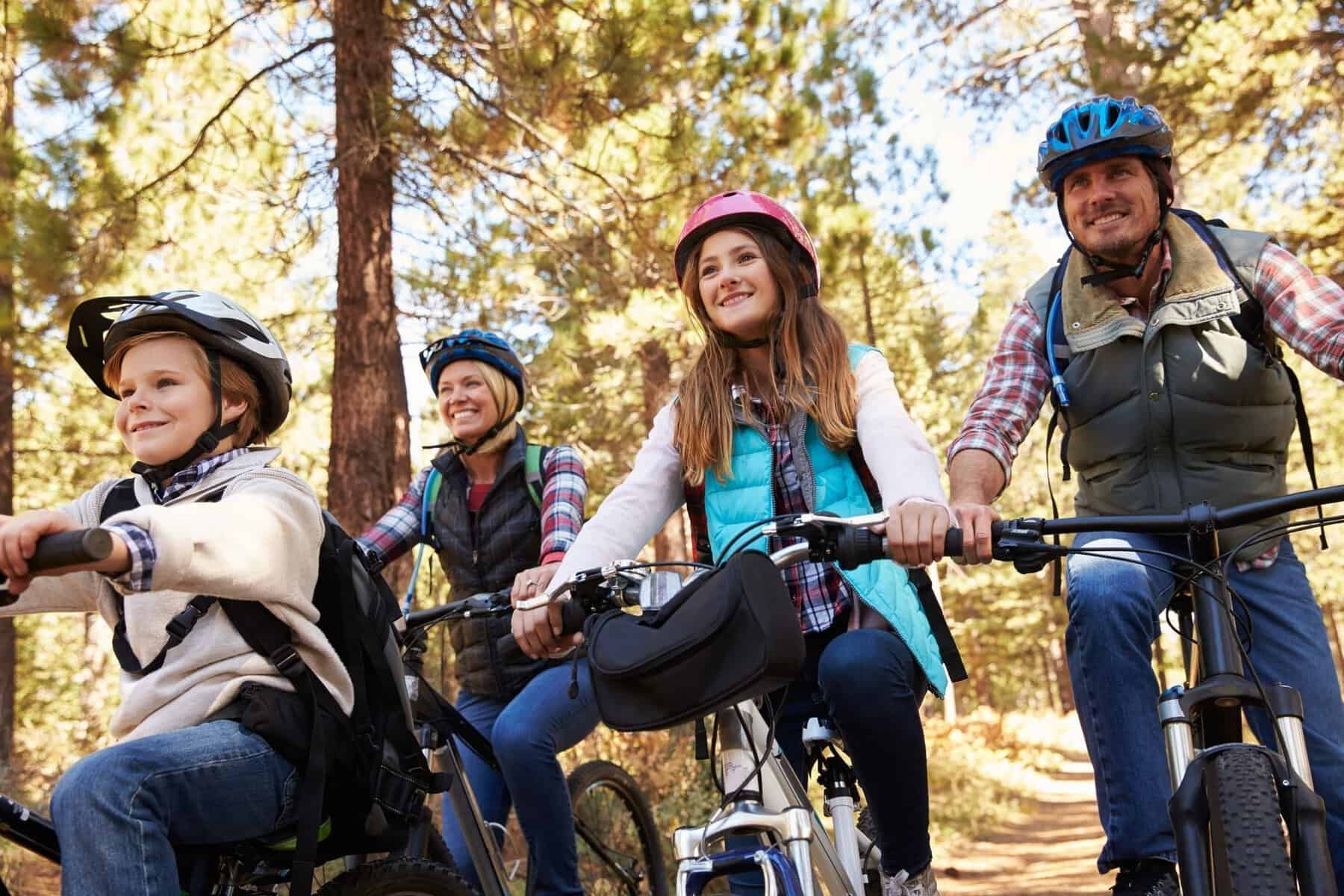
Eleven national routes, and they are signposted all the way
Denmark has eleven national cycle routes, totalling over 4.000 kilometres, and they are marked in both directions with blue signs and route numbers. This sounds administrative and in practice is the whole difference between a cycling holiday and a cycling tour: you can cycle for a week without looking at a map, because the next sign is always there. Route 1, the West Coast Route, runs from Rudbøl in the south to Skagen in the north and is part of the European North Sea Route. Route 8, the South Sea Route, connects Rødbyhavn with Sønderborg through the islands.
In Europe, the same system is called EuroVelo — 17 long-distance routes totaling about 90.000 kilometers, several of which begin or end in Denmark. The Berlin–Copenhagen route of about 630 kilometers is the most used to and from Denmark and can be ridden in a week at a leisurely pace, with the ferry across Gedser–Rostock as the shortest route.
The wind is the only decision that really matters
On the West Coast Route there are no hills to speak of, and yet it is the toughest of the Danish routes, because nothing stands between the bike and the westerly wind. Plan the route according to the forecast rather than the map, and be willing to ride the opposite way to the one you had planned. Headwinds for six hours cost more than 400 meters of elevation gain, and that is the one factor that no route description mentions.
The same applies in the mountains, where the altitude is the number that determines the day — not the kilometers. A day of 60 kilometers with 1.200 altitude meters in Tyrol takes longer than 120 kilometers on flat roads. If you want the mountains without the asphalt, gravel biking in Austria and the mountain bike routes in the Kitzbühel Alps are the way to go, while Kleinwalsertal is the softer version.
Cycling as a reason to travel
The Grand Départ of the Tour de France was in Copenhagen in 2022, and it left something that can still be felt: a generation that plans holidays according to a stage plan. The Tour de France 2025 with the route, stages and travel tips is the place to start if the trip needs to be timed after the race, and La Vuelta is the Spanish alternative in late summer, when the mountains are cooler than in July. If you want to ride the stages yourself, the classic climbs are open year-round — and they are empty in the morning.
Denmark by bike when the vacation needs to be short
The islands are still the best Danish cycling country because the distances are small enough that one day can accommodate both driving and a place to be. Five islands in Denmark on the same holiday and cycling holiday in Denmark combine the routes, and the Hærvejen goes through Jutland along the old studedrivervej — it exists as both a hiking and cycling route, and the two are only followed partially, so check which marking you follow.
Taking your bike on the train — and when it's not allowed
Most Danish trains take bicycles for a bicycle ticket, and on routes with a seat ticket, the bicycle must have its own reservation. In Germany and Austria, the system is the same, but the number of bicycle spaces per train is small and is booked early in the summer. On French, Spanish and Italian express trains, bicycles are only allowed if they are disassembled and packed in a bag within the dimensions — otherwise they must be sent as freight. This detail determines whether a one-way route is possible or whether the trip should be planned as a round trip back to the starting point. Traveling by train to Austria is the shortest way to the Alpine routes without a car.